
PlayStation 5 Pro to receive PSSR 2.0 upscaling update this quarter

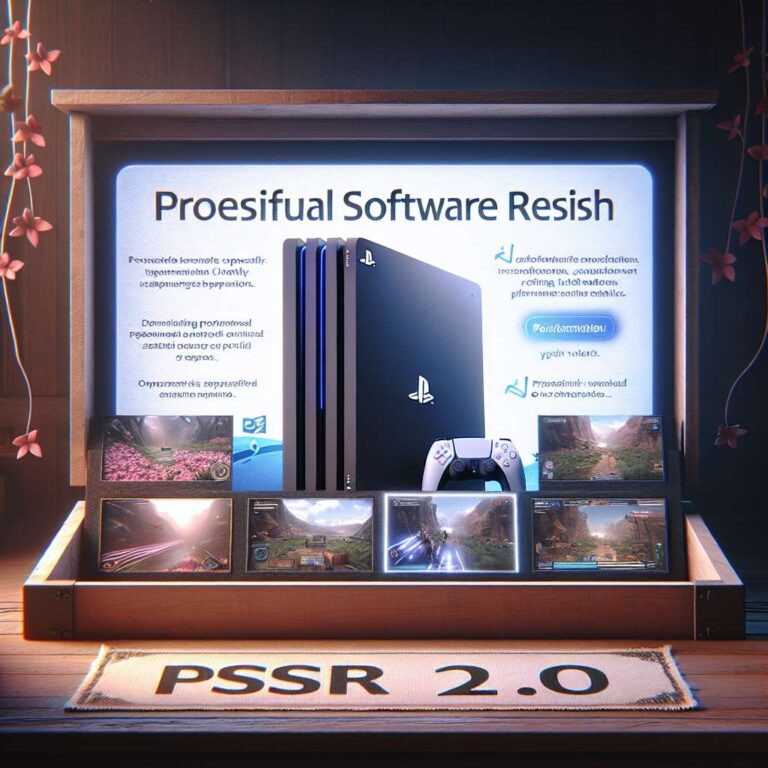
Sony is reportedly readying a PlayStation 5 Pro software update between January and March 2026 that will introduce PSSR 2.0, an upgraded Artificial Intelligence powered upscaling system designed to better exploit the console's hardware.

Sony is preparing a major software update for the PlayStation 5 Pro that aims to unlock hardware potential that has remained largely untapped since the console’s November 2024 launch. According to Japanese insider Gust_Fan, the upgrade will hit systems between January and March 2026, introducing PlayStation Spectral Super Resolution (PSSR) 2.0, a revised Artificial Intelligence powered upscaling system. The update is positioned as a response to complaints that the PlayStation 5 Pro, despite being the most powerful hardware on the market, has not shown meaningful improvements over the base PlayStation 5 model when it comes to Artificial Intelligence upscaling technologies that have been long present on PC systems.

The article explains that the initial version of PSSR often delivered only marginal visual gains while also introducing unwanted artifacts and rendering errors, which undermined its value as a flagship feature. PSSR 2.0 is described as implementing reconstruction techniques that are functionally similar to AMD’s FSR 4, with the goal of producing more stable high-resolution output from lower-resolution rendered frames. By refining its reconstruction and upscaling methods, the new version is expected to make more efficient use of the PlayStation 5 Pro GPU and reduce the visual issues associated with the first implementation.

Performance is a core focus of the planned upgrade, with the article stating that games currently running at 70-80 FPS should see both higher and more consistent frame rates. Some reports also indicate that frame generation technology may be added as part of the update, which the article notes would help Sony achieve its 4K 120 FPS target across a wider library of titles. If accurate, this combination of improved reconstruction and potential frame generation could finally differentiate the PlayStation 5 Pro in everyday use and demonstrate more of the console’s promised performance advantage.
53

Impact Score

Executives see limited Artificial Intelligence productivity gains so far

Corporate enthusiasm around Artificial Intelligence has yet to translate into broad gains in employment or productivity, reviving comparisons to the long lag between early computing breakthroughs and measurable economic impact. Recent surveys and studies show mixed results, with strong expectations for future benefits but little consensus on present gains.

Nvidia skips a new GeForce generation as Artificial Intelligence chips dominate

Nvidia is set to go a year without a new GeForce GPU generation for the first time since the 1990s as memory shortages and higher margins in Artificial Intelligence hardware reshape the market. AMD and Intel are also struggling to capitalize because the same supply constraints are hitting gaming products across the industry.

Where gpu debt starts to break

Stress in gpu-backed infrastructure financing is emerging around deals that lack the structural protections seen in the strongest transactions. Oracle, the Abilene Stargate project, and older CoreWeave debt illustrate different ways residual risk can surface when contracts, collateral, and counterparties fall short.

SK hynix starts mass production of 192 GB SOCAMM2

SK hynix has begun mass production of the 192 GB SOCAMM2, a next-generation memory module standard built on 1cnm LPDDR5X low-power DRAM. The module is positioned as a primary memory solution for next-generation Artificial Intelligence servers.

AMD taps GlobalFoundries for co-packaged optics in Instinct MI500

AMD is preparing a renewed manufacturing link with GlobalFoundries to bring co-packaged optics to its Instinct MI500 Artificial Intelligence accelerators. The move is aimed at improving bandwidth and power efficiency in data center systems by moving beyond copper-based interconnects.

Contact Us

Got questions? Use the form to contact us.

Contact Form

Clicking next sends a verification code to your email. After verifying, you can enter your message.