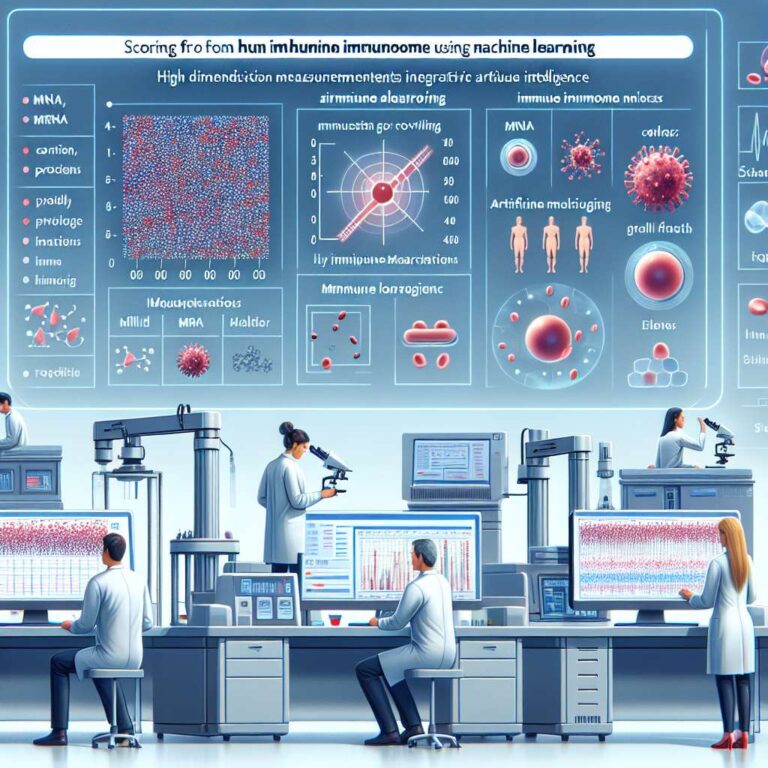
After subjecting a reporter’s blood to an exhaustive battery of measurements, Yale systems immunologist John Tsang delivered a single number, an immune health metric, and a plot showing how that score compares with others. The work reflects a shift from narrow blood counts toward comprehensive profiling of the human immunome, the vast, ever-changing network of cells and molecules that shapes vulnerability to infection, cancer, and aging. Unlike traditional complete blood counts that tally broad cell types, Tsang’s protocol assesses up to a million cells, proteins, mRNA, and other biomarkers and considers how they interact, aiming to capture the immune system’s overall fitness at a specific moment.
A 2024 Nature Medicine study from Tsang’s team analyzed blood from 270 people, including 228 patients with genetic disorders and 42 healthy controls, using advanced sequencing and high-dimensional assays. Machine learning and Artificial Intelligence integrated these data to produce an immune health metric for each participant and to place them on a continuum from less to more healthy. The study found recurring disruptions across different diseases, such as reduced natural killer cells, and confirmed that immune health generally declines with age. It also revealed overlap between seemingly healthy participants and those with disease, suggesting transient infections, aging-related impacts, or early, undetected pathology. The implications are significant: earlier detection, insight into variable responses to viruses and vaccines, and more personalized care. Tsang’s group is developing additional scores, including a bone marrow health metric and protein-based predictors of viral response.
The push is expanding beyond single labs. Shai Shen-Orr at the Technion has developed IMM-AGE to estimate a person’s immune age and advocates far broader sampling, noting that most data come from the United States and Europe. Past discrepancies, such as a malaria vaccine that performed well in Maryland but poorly in Africa, underscore how environment and genetics shape immune responses. The Human Immunome Project has enlisted Tsang and Shen-Orr as chief science officers and plans a pilot Immune Monitoring Kit across multiple regions, followed by scale-up to about 150 sites and hundreds of thousands of participants to inform clinical medicine, public health, and drug development.
For the reporter, Tsang’s test returned an immune health metric of 0.35, clustering with younger, clinically healthy individuals. Shen-Orr’s IMM-AGE analysis estimated an immune age of about 57, roughly a decade younger than his chronological age. Researchers caution that these are snapshots that will need repeated testing and larger, more diverse cohorts to refine interpretation. Looking ahead, they envision app-delivered immune scores after routine blood draws, and studies that link immune health to factors like pollution and climate. Experts suggest that, within a decade, such metrics could guide care and help target therapies to the specific cells and pathways driving disease.