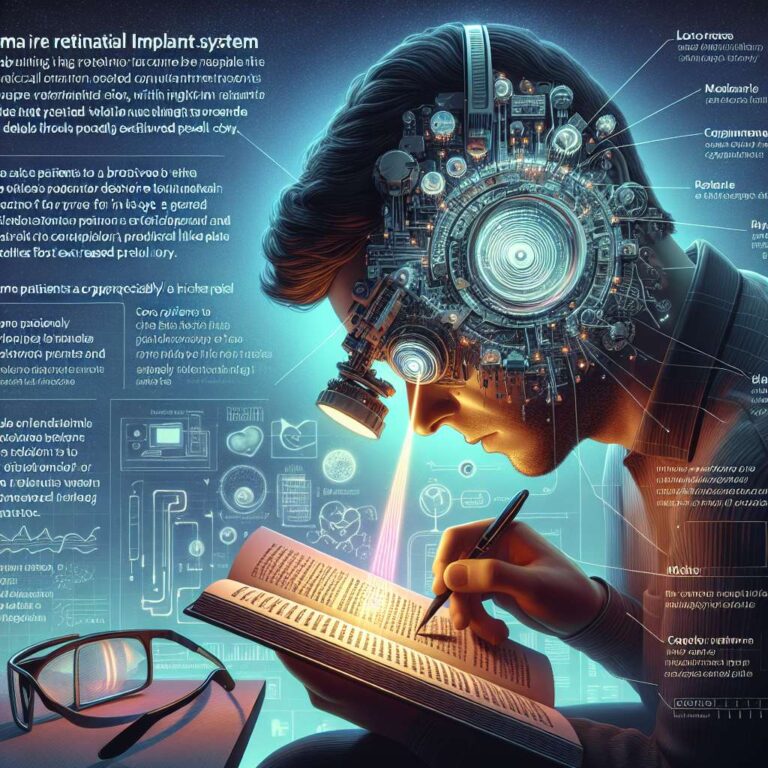
Science Corporation has acquired the PRIMA retinal implant, a microelectronic chip that can restore a form of artificial vision for people with central vision loss from macular degeneration. Detailed in the New England Journal of Medicine, the system allowed some patients to read text and even do crosswords. The chip sits under the retina and uses signals from a camera on glasses to emit electrical pulses that bypass damaged photoreceptors, effectively routing visual information back into the brain. José-Alain Sahel of the University of Pittsburgh, who led testing, said one patient in the UK could read pages of a regular book, calling the effect unprecedented.
The technology targets geographic atrophy, where peripheral vision remains but central vision is lost, affecting around one in ten people over 80, according to Prevent Blindness. In a European study of 38 patients who received the implant in one eye, participants on average gained the ability to read five additional lines on a standard eye chart. Some improvements were aided by features such as a zoom function to help users isolate text. The system currently yields about 400 perceptual spots or pixels, enough to discern outlines of words and objects, and patients report the perceived color as yellowish blue or sun-like.
Developed over two decades by Stanford University professor Daniel Palanker, PRIMA is powered and signaled by light rather than a wired connection. A wearable camera captures scenes and projects bright infrared light into the eye, which the chip’s array of tiny solar cells converts into electrical current that stimulates retinal tissue. Palanker says a next-generation device with five times more pixels should provide richer detail, and that patients tend to perceive individual stimulations as continuous lines and letters. He notes the eventual market size will depend on the quality of vision the system delivers.
The program was rescued after Pixium Vision, the French startup cofounded by Sahel, neared bankruptcy. Science Corporation purchased the assets for about €4 million, according to court filings, and has applied for approval to sell the implant in Europe while engaging with regulators in the US. The company is also redesigning the external hardware, moving from a bulky controller and camera to a sleeker setup consolidated into oversized sunglasses to improve everyday usability.
Because the retina is an outgrowth of the brain, PRIMA qualifies as a brain-computer interface. It follows earlier efforts such as the Argus II, which reached market before being withdrawn after failing to achieve commercial success, according to Cortigent. While Neuralink is promoting a separate approach called Blindsight that aims to stimulate the visual cortex directly and has not yet been tested in a person, Science’s founder Max Hodak says the goal is to build a large medical technology company and bring the retinal system to patients.