
Samsung winds down chip lines before 18-day strike

Samsung is moving its semiconductor factories into emergency management mode ahead of an 18-day worker strike. The slowdown could disrupt global DRAM and NAND Flash supply and add pressure to an already tight memory market.

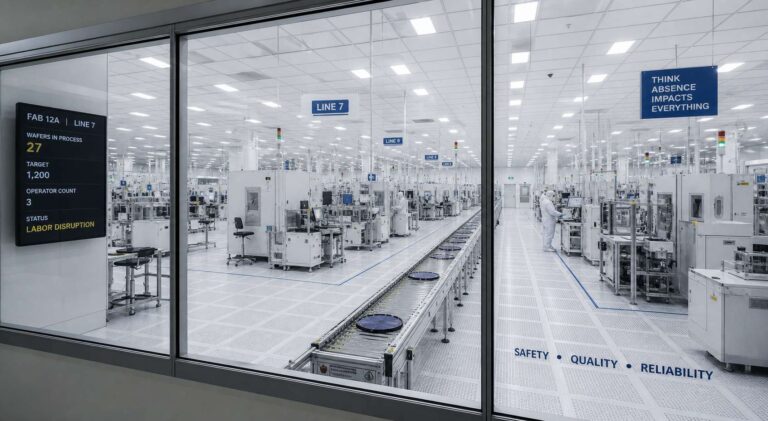
Samsung is gradually winding down factory production ahead of an 18-day strike across its facilities. South Korean news outlets report that the company is slowing manufacturing operations to enter emergency management mode, a step that limits production capacity as worker shortages begin to stall production lines.

According to the Seoul Economic Daily, about 43,286 factory workers have joined the picket line for the strike, which is more than half of the entire semiconductor division (DS unit) labor force. In emergency mode, Samsung will restrict the number of new wafers introduced into the production process, which is a long and demanding procedure that typically runs 24/7. The factories can still operate at minimum production capacity because of extensive automation, but operating the machines still requires human involvement.

TrendForce estimates that about 3-4% of the world’s global DRAM supply could be disrupted, along with about 3% of the world’s NAND Flash supply. With DRAM and NAND Flash shortages already at their peak, the disruption is expected to worsen global supply chain pressure. The targeted production lines in the strike are for HBM, (LP)DDR5, and some custom logic production.

If customers see continued uncertainty around Samsung’s production capacity, some may shift orders to rivals such as SK hynix or Micron. With more than half of the workforce absent, there will not be enough factory workers to keep production lines running, and output is expected to drop significantly.
68

Impact Score

Musk and Altman clash over credibility in final trial week

The final week of the Musk v. Altman trial centered on whether Elon Musk or Sam Altman is more credible, and whether OpenAI abandoned its nonprofit mission. Jurors are now weighing competing claims over control, restructuring, and Artificial Intelligence safety.

Artificial Intelligence model learns to say it does not know

South Korean researchers developed a training method that helps Artificial Intelligence models recognize when they lack knowledge instead of responding with misplaced confidence. The approach aims to reduce hallucinations and improve reliability in areas such as autonomous driving and medicine.

Artificial Intelligence reshapes the UK jobs market

Artificial Intelligence is changing how UK businesses hire, train and structure work, with growing adoption among SMEs and rising concern over entry-level roles. The shift is increasing demand for digital skills while deepening worries about youth unemployment and long-term skills shortages.

State media shapes large language model outputs

Research in Nature finds that government control of media can influence large language model behavior through training data. The effect appears especially visible across languages, with models producing more favorable answers about China when prompted in Chinese.

Contact Us

Got questions? Use the form to contact us.

Contact Form

Clicking next sends a verification code to your email. After verifying, you can enter your message.