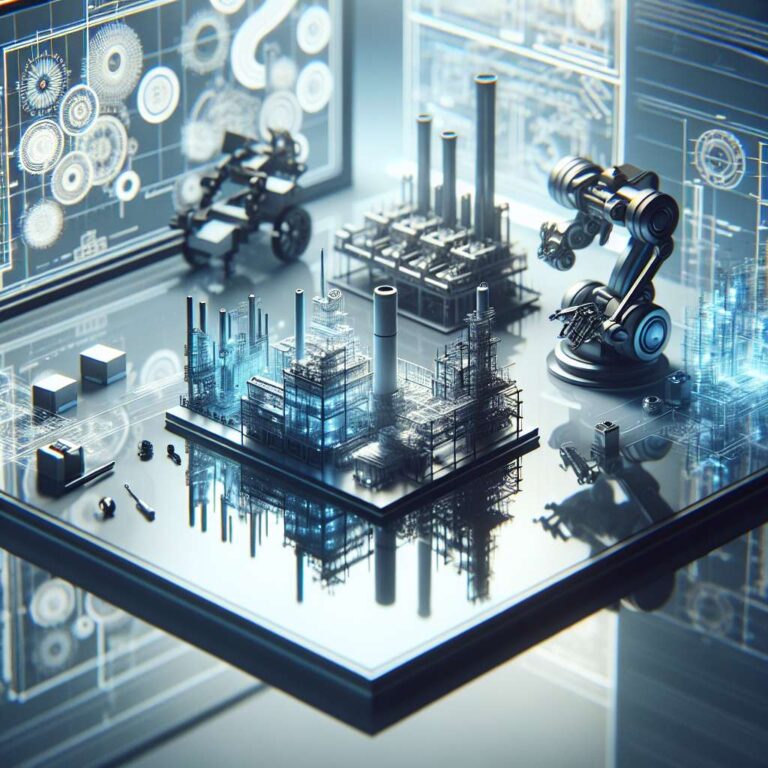
Investments in industrial and physical Artificial Intelligence are driving stronger demand for physically accurate digital twins that mirror real-world environments, facilities and processes. The article frames digital twins as both planning and operational tools and as simulation grounds for vision Artificial Intelligence agents, autonomous vehicles and robot fleets, helping those systems operate safely and reliably in production settings.
NVIDIA used this year’s SIGGRAPH conference to highlight a stack of research, software and infrastructure intended to speed digital twin and physical Artificial Intelligence development. Announcements include Omniverse software development kits that bridge MuJoCo and Universal Scene Description (OpenUSD) to enable more than 250,000 MJCF robot learning developers to simulate across platforms; Omniverse NuRec libraries and neural rendering that support 3D Gaussian splatting to reconstruct real scenes from sensor data; and open-source releases of Isaac Sim 5.0 and Isaac Lab 2.2 with NuRec and new OpenUSD robot and sensor schemas. NVIDIA also promoted Cosmos world foundation models, including Cosmos Transfer-2 and NVIDIA Cosmos Reason, and pointed to infrastructure such as NVIDIA RTX PRO servers and NVIDIA DGX Cloud to support large-scale workflows.
The article describes a growing OpenUSD ecosystem and practical industry deployments. The Alliance for OpenUSD added general members including Accenture, Esri, HCLTech, PTC, Renault and Tech Soft 3D. NVIDIA launched an OpenUSD development certification and a free digital twins learning path to build expertise. Customer examples show how companies use Omniverse and OpenUSD: Siemens’ Teamcenter Digital Reality Viewer for collaboration on photorealistic twins; Sight Machine’s Operator Agent combining live data and agentic recommendations; Rockwell Automation’s Emulate3D Factory Test for physics-based factory simulations; EDAG’s platform for project and production optimization; and Amazon Devices & Services and Vention using digital twins to train and deploy robotic systems. The article closes with links to Omniverse Kit tutorials, SIGGRAPH research sessions and hands-on NuRec and Isaac Sim resources for developers looking to adopt OpenUSD and digital twin workflows.