
Nvidia deploys generative artificial intelligence tools to 30,000 engineers

Nvidia has rolled out generative artificial intelligence coding tools to 30,000 engineers through a customized Cursor environment from Anysphere, reporting up to three times higher code output while maintaining strict quality controls for mission-critical software.

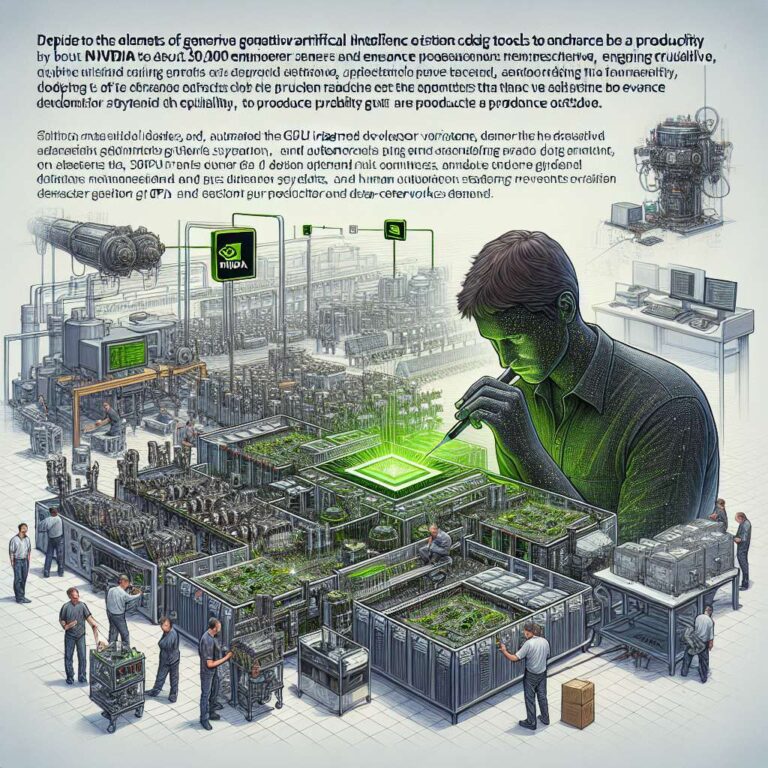
Nvidia has broadly deployed generative artificial intelligence tools across its engineering organization, rolling them out to an estimated 30,000 engineers. Through a partnership with San Francisco based Anysphere Inc., Nvidia is using a customized version of the Cursor integrated developer environment that focuses on artificial intelligence assisted code design. According to internal results, Nvidia’s engineers are now reportedly producing as much as three times the code compared to the previous development pipeline, meaning a growing share of the company’s products and services is being created with artificial intelligence guidance under human oversight.

The company’s adoption of generative artificial intelligence is occurring in the context of highly sensitive, mission critical products that cannot tolerate the typical error rates associated with artificial intelligence generated code. These products include GPU drivers that support everything from basic gaming to large scale artificial intelligence training and inference operations. To mitigate risk, Nvidia is likely enforcing strict internal guidelines for newly generated code and requiring an extensive range of tests before any changes reach production systems, reflecting the need for reliability in graphics and data center workloads.

Nvidia’s latest rollout builds on several years of artificial intelligence assisted workflows inside the company. Nvidia has already implemented a dedicated supercomputer that has been continuously enhancing DLSS (Deep Learning Super Sampling) for several years, using machine learning to improve image quality and performance in supported applications. In addition, some chip designs have been optimized using the company’s internal artificial intelligence tools, demonstrating that automated and assisted methods are influencing both software and hardware development across Nvidia’s product stack.
70

Impact Score

HMRC signs £175m Quantexa deal for fraud detection

HM Revenue and Customs has signed a £175 million, 10-year agreement with Quantexa to unify fragmented data and strengthen fraud detection. The deployment is designed to automate routine work while keeping decisions transparent, auditable and subject to human approval.

Us supercomputers test new Artificial Intelligence chip suppliers

Sandia National Laboratories is evaluating chips from Israeli startup NextSilicon as major chipmakers shift their roadmaps toward Artificial Intelligence. The move reflects growing concern that mainstream processors are deprioritizing the scientific computing features government labs still need.

EU Artificial Intelligence Act amendments delay some deadlines and add new bans

A provisional Digital Omnibus on Artificial Intelligence would push back several EU Artificial Intelligence Act deadlines, refine how the law interacts with sector rules, and introduce new prohibited practices. The package also expands limited bias-testing allowances and strengthens centralized oversight for some high-impact systems.

Qwen 3.5 raises concerns about censorship embedded in model weights

A technical analysis of Alibaba Cloud’s Qwen 3.5 points to political censorship circuits embedded directly in the model’s learned weights. The findings highlight operational, compliance, and product risks for startups building on third-party Artificial Intelligence models.

Laptop prices rise as memory shortages hit PCs

Laptop prices are climbing as memory makers redirect production toward data center demand driven by Artificial Intelligence. The squeeze is spreading beyond RAM to graphics memory and SSDs, raising costs across the PC market.

Contact Us

Got questions? Use the form to contact us.

Contact Form

Clicking next sends a verification code to your email. After verifying, you can enter your message.