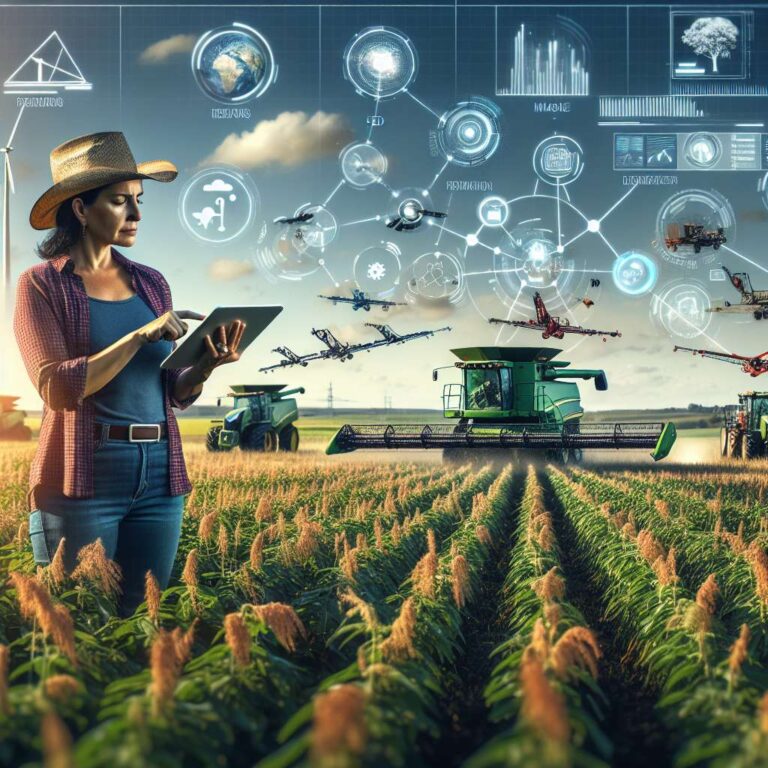
Artificial intelligence technologies are already appearing across modern farms, where they are described as the future of farming because they support decision making, automate repetitive work and analyze large volumes of agronomic data. Producers are being encouraged to look beyond the hype and focus on practical tools that can translate on farm information into specific actions, such as adjusting seeding rates, fine tuning fertilizer plans and timing field operations to match local conditions. As adoption grows, agriculture is emerging as a significant test bed for artificial intelligence systems that must function reliably in harsh and variable outdoor environments.
On many operations, artificial intelligence powered software is increasingly embedded in equipment such as combines, sprayers and tractors, which now collect sensor readings, yield maps and machine performance data as they work. Computer vision and machine learning models can help equipment distinguish between crops and weeds, monitor plant health from aerial images and reduce overlap or misses in the field. These capabilities are framed as tools to address input costs, labor constraints and environmental pressures by making every pass across a field more precise and more efficient, while still leaving agronomic decisions and long term strategy to the farmer.
Experts in agricultural technology point to a shift from stand alone gadgets toward connected systems, where information from satellites, drones, soil probes and weather stations is combined by artificial intelligence into farm specific recommendations. That evolution raises questions about data ownership, connectivity in rural regions and the skills producers will need to interpret and trust algorithmic output. Supporters argue that when farmers retain control of their information and work with transparent tools, artificial intelligence can strengthen resilience to volatile markets and climate variability, while skeptics caution that over reliance on opaque systems could concentrate power among large technology providers. The debate now focuses less on whether artificial intelligence will be used in farming and more on how it will be governed, shared and integrated into everyday practice.