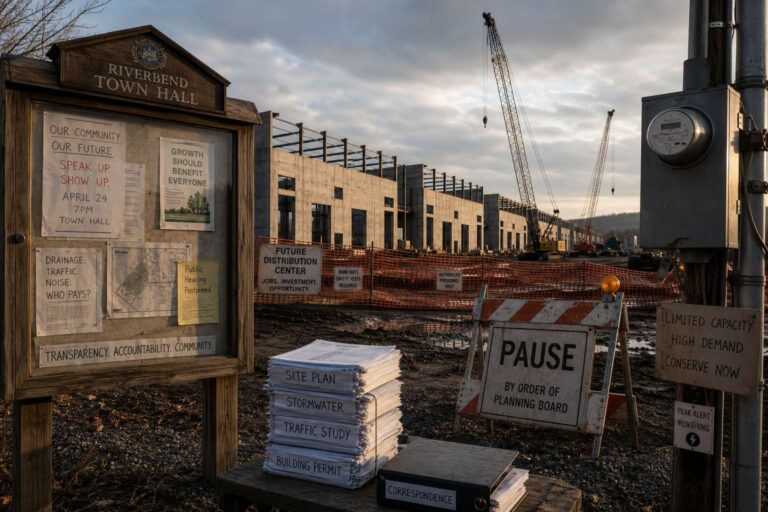
Data center developers and hyperscalers are racing to build Artificial Intelligence infrastructure and data centers across the United States. In response, federal and state policymakers have introduced legislative measures targeting rising electricity costs, grid strain, environmental impacts, and Artificial Intelligence-driven job losses. The most aggressive proposals would temporarily halt new construction or upgrades for large facilities until stronger safeguards are in place.
On March 25, 2026, Sen. Bernie Sanders and Rep. Alexandria Ocasio-Cortez announced the Artificial Intelligence Data Center Moratorium Act. The act would impose a nationwide halt on constructing or upgrading new or existing data centers with a power demand of 20 megawatts (MW) or more until “strong national safeguards” are in place. Its goals include preventing higher electricity costs for consumers, limiting environmental harm, giving affected communities the ability to approve or reject projects, requiring union labor and prevailing wages, and barring government subsidies for the construction, upgrading, or operation of Artificial Intelligence data centers. Whether the measure advances in Congress remains uncertain, but it reflects broader efforts to place guardrails around rapid infrastructure expansion.
Similar pressure is building at the state and local levels. In New York, Senate Bill 9144 would pause new data center development by blocking permits for the siting, construction, or operation of a data center that is capable of using 20 MW or more of electricity until state agencies issue new regulations and address identified impacts. Lawmakers in at least 10 other states have introduced similar legislation that would temporarily ban data center construction. Local governments have moved even faster, with more than 100 localities across the U.S. enacting moratoriums on data center construction over the past year. In Oldham County, KY, an indefinite moratorium on applications to build or expand data centers remained in place until appropriate regulations are adopted, and a developer that had already applied for permits for a 100 MW facility chose to abandon the project.
Governments are also reassessing the tax incentives long used to attract these facilities. Of the 38 states that currently offer such incentives, 28 are considering legislation that would end or curtail those benefits. In Virginia, State Senate lawmakers recently proposed Senate Bill 30, which would end a retail sales and use tax exemption for qualifying data center operators on January 1, 2027, eight years ahead of the current scheduled sunset. In Port Washington, WI, officials approved the nation’s first data center referendum, requiring voter approval for tax incremental financing tied to large-scale projects with a base value or project costs of more than ? million.
The policy consequences remain unclear, but the direction is unmistakable. Developers, contractors, lenders, and other stakeholders are being pushed to account for the risk that in-progress or planned projects could be delayed, halted, or stripped of subsidies. Community opposition is becoming a more important factor in site selection, and project participants may need to revisit contract risk allocation, financing assumptions, and long-term location strategy as the regulatory landscape shifts.