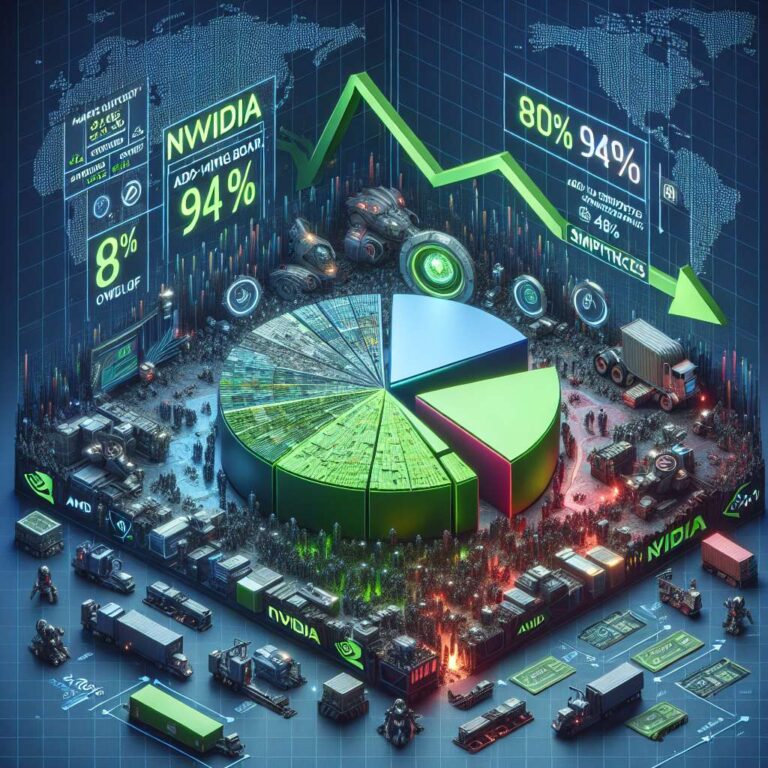
Nvidia has tightened its grip on the discrete graphics market, with Jon Peddie Research’s Q4 2025 add in board numbers showing the company holding a 94 per cent share even as prices rise and supply remains constrained. The report says overall AIB shipments fell 4.4 per cent to 11.5 million units, underlining a market where demand and availability are increasingly out of sync. JPR reckons the market is heading for a CAGR of minus 5.9 per cent from 2024 to 2028, but still expects an installed base of 172 million AIBs and a 103 per cent jump in desktop PCs running an AIB over that period.
Attach rates and cpu trends highlight how the discrete graphics ecosystem is being squeezed. The attach rate for the quarter dropped to 55 per cent, down 12.3 per cent from the previous quarter, signalling fewer new desktop systems are shipping with dedicated boards. The desktop PC CPU market dipped 0.7 per cent year on year and rose nine per cent quarter on quarter, suggesting modest short term recovery but a softer annual picture. On share movement, Nvidia gained 1.6 per cent, Intel stayed flat, and AMD lost 1.6 per cent, leaving AMD with five per cent and Intel with one per cent, while Nvidia is 10 points up year on year.
Shipments remain below historical norms and are being distorted by memory costs and trade policy. JPR pegs total AIB shipments at 11.48 million units, which it says sits below the 10 year average, even though the report says shipments were up 36 per cent in the latest quarter. Late 2025 was when gpu pricing started to shoot up, and 2026 has been a bloodbath for availability and sanity, with tariffs adding pressure but DRAM pricing and shortages singled out as the main culprits, alongside scalpers. The expectation is that the shortages will not clear up anytime soon, leaving buyers paying more while vendors ship less. Beyond graphics, JPR’s report puts PC CPU unit shipments at 21 million units, and while the cpu side looks healthier on paper, new buyers still face higher memory costs and knock on price increases across the system.