
Nvidia DLSS 4.5 rolls out to all GeForce RTX GPUs

Nvidia is releasing DLSS 4.5 across the entire GeForce RTX lineup, pairing a second-generation Transformer upscaler with simple per-game controls in the Nvidia app.

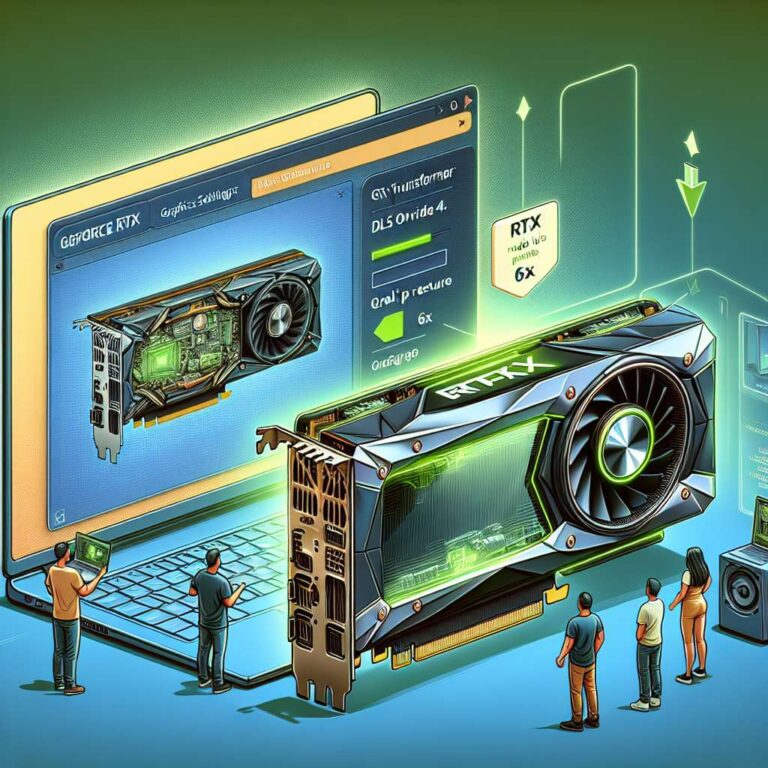
Nvidia is rolling out DLSS 4.5 to every GeForce RTX GPU from day one, extending support across the RTX 20, RTX 30, RTX 40, and the latest RTX 50 series Blackwell graphics cards. The company positions DLSS 4.5 as one of its most notable CES 2026 keynote announcements, and it is designed to be enabled easily through the Nvidia app. Users can open the Graphics tab, select the option labeled DLSS Override – Model Preset, and apply this configuration as a global setting or individually for specific programs to control how DLSS behaves per title.

Within the Nvidia app, choosing the Recommended option configures Preset M to DLSS Performance mode, Preset L to DLSS Ultra Performance mode, and Preset K to the other available modes, giving players a structured way to trade off image quality against frame rate. Nvidia states that this setup works with more than 400 titles that support DLSS Super Resolution, and over 250 titles that work with the multi-frame generation of DLSS 4. By aligning presets with existing DLSS modes, the company is trying to make the new capabilities accessible without forcing users to learn an entirely new configuration model.

DLSS 4.5 builds directly on the architectural change introduced with regular DLSS 4, where Nvidia shifted from convolutional neural network based Artificial Intelligence models to a Transformer based architecture to significantly improve image quality. The new release updates the algorithm with a more advanced Transformer model trained on a much larger dataset, and this second-generation Transformer was developed with five times the computational investment of the first DLSS 4 Transformer upscaler and utilizes the FP8 data format, allowing for more processing with minimal precision loss. Nvidia says the algorithm is more context aware and uses input data for upscaling more intelligently, which results in more detailed and precise video output. For GeForce RTX 50 series GPUs, Nvidia dedicated a dynamic multi-frame generation with 6x increase in rendered frames as an exclusive feature, while older RTX series are left on 2x, creating a performance tier that favors the latest hardware while still upgrading previous generations.
55

Impact Score

Executives see limited Artificial Intelligence productivity gains so far

Corporate enthusiasm around Artificial Intelligence has yet to translate into broad gains in employment or productivity, reviving comparisons to the long lag between early computing breakthroughs and measurable economic impact. Recent surveys and studies show mixed results, with strong expectations for future benefits but little consensus on present gains.

Nvidia skips a new GeForce generation as Artificial Intelligence chips dominate

Nvidia is set to go a year without a new GeForce GPU generation for the first time since the 1990s as memory shortages and higher margins in Artificial Intelligence hardware reshape the market. AMD and Intel are also struggling to capitalize because the same supply constraints are hitting gaming products across the industry.

Where gpu debt starts to break

Stress in gpu-backed infrastructure financing is emerging around deals that lack the structural protections seen in the strongest transactions. Oracle, the Abilene Stargate project, and older CoreWeave debt illustrate different ways residual risk can surface when contracts, collateral, and counterparties fall short.

SK hynix starts mass production of 192 GB SOCAMM2

SK hynix has begun mass production of the 192 GB SOCAMM2, a next-generation memory module standard built on 1cnm LPDDR5X low-power DRAM. The module is positioned as a primary memory solution for next-generation Artificial Intelligence servers.

AMD taps GlobalFoundries for co-packaged optics in Instinct MI500

AMD is preparing a renewed manufacturing link with GlobalFoundries to bring co-packaged optics to its Instinct MI500 Artificial Intelligence accelerators. The move is aimed at improving bandwidth and power efficiency in data center systems by moving beyond copper-based interconnects.

Contact Us

Got questions? Use the form to contact us.

Contact Form

Clicking next sends a verification code to your email. After verifying, you can enter your message.