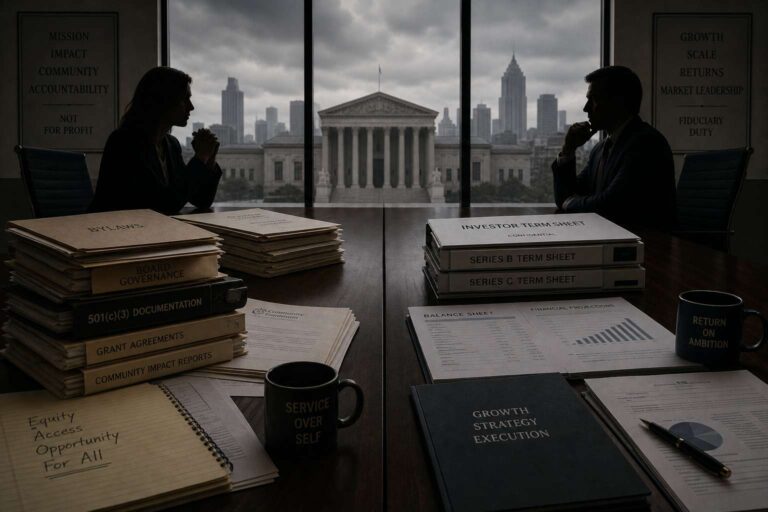
Elon Musk and Sam Altman began their courtroom fight in Oakland, California, with Musk accusing OpenAI and president Greg Brockman of breaching the company’s charitable trust by turning it into a for-profit business. Musk contends that the money he contributed around a decade ago was intended to support a nonprofit mission, not a corporation, and he is seeking remedies that include large damages, the removal of Altman, and unwinding OpenAI’s restructuring. In October 2025 OpenAI struck deals with the attorneys general of California and Delaware that would essentially allow its nonprofit portion to have less day-to-day control of OpenAI. It’s a compromise from what OpenAI originally proposed, but Musk still wants to stop it.
OpenAI’s defense centers on the claim that Musk understood and accepted the need for a for-profit arm because building Artificial Intelligence is expensive. A key issue is timing. Musk founded OpenAI with Altman and Brockman in 2015, and he brought the suit in 2024. There’s a statute of limitations for charitable trust claims; you need to have brought a claim within three to four years after you find out about the alleged misconduct. Musk has tried to argue that while he had suspicions earlier, it was really only in 2022 that he concluded OpenAI had abandoned its original charitable mission. Early proceedings have not clearly established that point.
The trial has also become a forum for arguments about Artificial Intelligence safety, even as the judge pushed back on efforts to turn the case into a broader referendum on the technology’s risks. One notable exchange came after one of Musk’s lawyers warned, “We could all die as a result of AI.” The judge responded that the case was not about whether Artificial Intelligence has damaged humanity and noted that Musk is building a company in the same field. Inside the courtroom, Musk has appeared calm and polished, joking with lawyers and the judge, though he has shown discomfort under tougher cross-examination.
Testimony has already surfaced fresh details about industry behavior. On the fourth day of the trial, Musk admitted during cross-examination that xAI distills OpenAI’s models to train its own models, while arguing that such practices are now standard across labs. Proceedings have also highlighted communications among senior technology executives, including a text exchange described as showing Musk and Meta chief executive Mark Zuckerberg discussing ways to oppose OpenAI’s restructuring and even explore a bid for the nonprofit’s assets. The trial is supposed to last around three weeks. The nine jurors will deliver an advisory verdict that guides the judge on how to decide Musk’s claims against OpenAI. The judge doesn’t have to listen to the jury and can decide however she wants.