This Sunday Special newsletter surveys a week of scientific and technological advances beyond Artificial Intelligence, starting with work on shrinking smartphone hardware using a new type of laser. Researchers have created a “phonon laser” that generates surface acoustic waves on a chip and effectively produces microscopic “mini-earthquakes”. The phonon laser produces surface acoustic waves at 1 gigahertz, with the potential to reach hundreds of gigahertz (far beyond todayu2019s 4 gigahertz ceiling), and the half-millimeter device could potentially compress all of a smartphoneu2019s radio components onto a single chip rather than multiple separate modules. In the realm of neuromodulation, Boston-based Modulight Biotherapeutics is advancing light-based therapies for chronic pain, preparing human trials within two years that target the trigeminal nerve for facial pain, while trials for early vision restoration are already in progress and further applications for epilepsy and Parkinsonu2019s disease are under exploration.
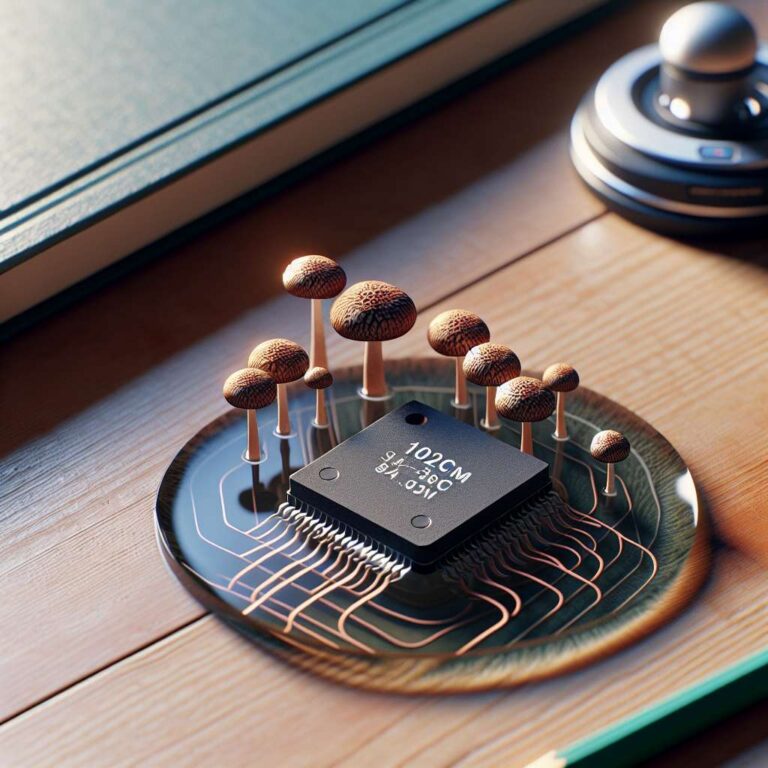
The newsletter also highlights a striking example of “living computers” powered by fungi. Scientists at Ohio State have used dehydrated shiitake mushrooms to create organic memristors, effectively turning edible fungi into working RAM that exhibits brain-like electrical behavior and retains memory of prior signals. Unlike conventional semiconductors that depend on rare earth minerals and energy-intensive manufacturing, fungal networks are cheap to cultivate and environmentally friendly, though the researchers emphasize that substantial miniaturization is required before such devices can be commercially viable. Alongside these research stories, the issue curates consumer technology, showcasing the INIU MagSafe Charger, described as a 10,000mAh magnetic power bank for iPhones, the Livall PikaBoost 2 that uses a 500W motor to transform standard bicycles into e-bikes, the Huupe Mini smart basketball hoop with sensors, games, and streaming features, and the Dreame X50 Ultra robot vacuum, which is promoted as capable of climbing stairs and navigating homes by voice command.
Trending social media science and tech clips receive a dedicated section, from a viral speed-reading challenge to a zebrafish embryo time-lapse spanning 16 hours that has fascinated Reddit users. Other viral content includes a Chinese engineer, Li Jiaqi, who built a gaming rig that fires simulated “bullets” at him whenever he is shot in a game, resurfaced images of Sonyu2019s 2009 Xperia Pureness phone with a transparent LCD screen, and an ultra-high-speed photograph from 1952 capturing a nuclear blast less than a millisecond after ignition. The “Only good news” segment focuses on more human-centered innovations: Valley State Prison in Chowchilla, California, is using 100 Meta-donated Oculus headsets in a virtual reality program that simulates job interviews, ATM use, and travel, with the program reporting a 96% drop in disciplinary infractions over one year and running three times annually across four California prisons. Medical advances include a spray-on powder that instantly gels on contact with blood and seals wounds in about one second while remaining stable for about two years at room temperature, and denovoSkin, a personalized bilayer skin graft grown from patientsu2019 own cells that is being used to treat over 80 severe burn survivors from a New Yearu2019s fire at the Crans-Montana ski resort, with 13 patients already receiving treatment in a Phase 3 trial across 20 European burn centers. The issue closes with a trivia question about “The Isolator,” a 1920s-era helmet designed to block 95% of sounds and peripheral vision to combat distraction, while inviting reader feedback on the newsletter.