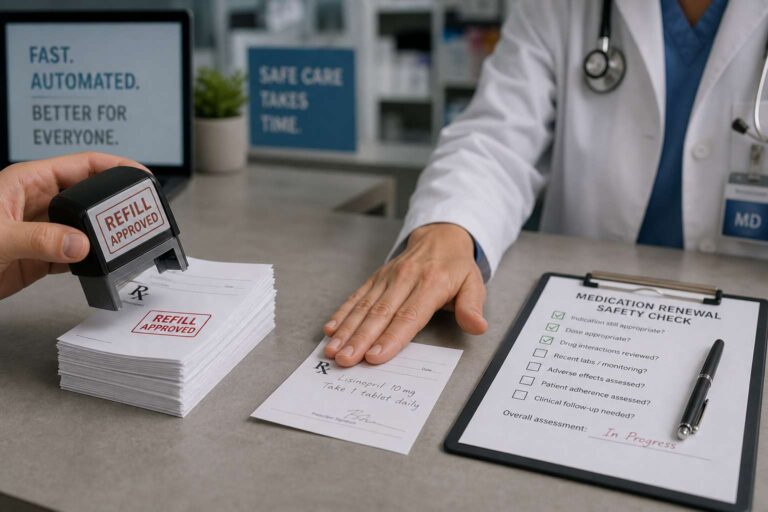
Utah’s Medical Licensing Board is calling for the immediate suspension of a first in the nation pilot program that allows an Artificial Intelligence system to approve prescription medication renewals. The dispute centers on the state’s agreement with Doctronic, whose automated system can process 30-, 60- or 90-day renewals for medications that had already been prescribed by licensed physicians. Board members said they should have been consulted before the program went live, and warned that moving ahead without the board’s input could put patients at risk.
The board argued that refill decisions require physician authorization for clinical reasons, including reassessing dose safety, monitoring side effects, and checking for contraindications or new drug interactions. It warned that patients who continue refilling medications without assessment may remain on outdated or suboptimal therapy for months or years. In its letter to the Office of Artificial Intelligence Policy, the board also objected to what it described as the possibility that Artificial Intelligence or financial motivations could override patient safety obligations.
State officials and Doctronic defended the pilot as tightly limited and overseen by medical professionals. The Office of Artificial Intelligence Policy said the system operates within strict parameters and with physician oversight, with the goal of reducing clinician workload, improving refill continuity, and expanding access for patients. Matt Pavelle, Doctronic’s co-founder and co-CEO, said the company is participating as designed with safeguards and physician involvement. The office added that the system cannot issue new prescriptions, handle controlled or addictive substances, or make changes to treatment plans.
Officials said the pilot will not be suspended at this time because it is still in its first phase, which requires a licensed medical practitioner’s approval before issuing a renewal. They said the state hasn’t received any serious safety incidents, though a third-party red teaming report identified potential vulnerabilities under adversarial usage. The Utah Division of Professional Licensing and the Office of Artificial Intelligence Policy said the program may be modified or canceled if safety benchmarks are not met.
The state also disputed the board’s suggestion of financial motives, saying neither Utah nor the Department of Commerce has any interest in the financial outcomes of any company. At the same time, officials said the pilot had been reviewed by several medical professionals before launch and that many suggested guardrails were incorporated. They also pledged to work more closely with the Medical Licensing Board in future phases of the Doctronic pilot and in future healthcare-related proposals.