On November 2, 2000, NASA astronaut Bill Shepherd and Russian cosmonauts Sergei Krikalev and Yuri Gidzenko docked with the International Space Station, beginning 25 years of continuous human presence in orbit. MIT-trained astronauts, scientists, and engineers have been integral to the station’s design, assembly, operations, and research. Among them, Mike Fincke, who had already logged 381 days across three prior missions, returned on August 1 as a member of Expedition 73 and called the achievement a testimony to teamwork across engineering, science, and diplomacy.
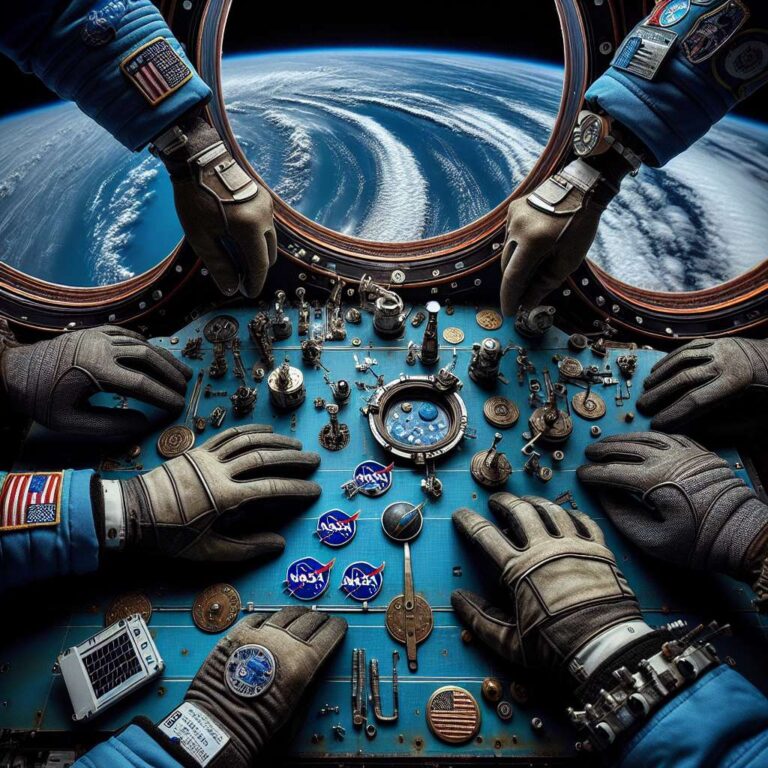
Building and operating the station demanded unprecedented complexity. Pamela Melroy, who flew three shuttle missions tied to ISS assembly, said lessons from Shuttle-Mir proved vital as 10 MIT astronauts helped execute 13 shuttle flights for construction and resupply through 2011. Expedition One commander Shepherd recalled early challenges, including fabricating a worktable from carbon dioxide absorber frames with tools the crew had brought along. The improvised, now-Smithsonian table became a symbol of problem solving under pressure.
MIT’s presence has extended through long-duration expeditions, with 12 alumni and one Whitehead Institute affiliate completing 18 such missions. Cady Coleman served 159 days as lead robotics and science officer, conducting hundreds of experiments spanning basic research and technology development for future lunar and Mars missions. Fincke credited MIT’s mens et manus ethos with preparing him for spaceflight, while former MIT assistant professor Woody Hoburg, who piloted a 186-day mission in 2023, underscored the station’s enduring engineering achievement.
ISS has also been a platform for MIT-led research. MACE-II, developed by professor David Miller and the Space Systems Laboratory, became the first active United States scientific investigation on the station, advancing structural dynamics techniques later used to test the James Webb Space Telescope. The SPHERES satellites, operated on station from 2006 to 2019, enabled precision control experiments for multiple spacecraft, with upgrades for tandem flight, vision-based navigation, and fluid slosh studies. Greg Chamitoff became the first principal investigator to perform his own research onboard when he programmed SPHERES in 2008, and the Zero Robotics competition engaged nearly 20,000 students to run their algorithms on orbit. MACE-II and SPHERES will be displayed at the National Air and Space Museum’s “At Home in Space” gallery in 2026.
Other MIT-linked science has ranged from particle physics to biology. Samuel C.C. Ting led the international effort behind the Alpha Magnetic Spectrometer, delivered in 2011, which has measured more than 253 billion cosmic ray events at energies up to multiple tera-electron-volts, data that will require new physics models to fully interpret. Kate Rubins became the first person to sequence DNA in space in 2016 using a commercially available device, proved that standard lab tools can work in orbit, and later coauthored a three-dimensional microbiome map of the station.
The station continues to serve as a test bed for future exploration. In 2023, MIT Lincoln Laboratory demonstrated high-bandwidth laser links between its ILLUMA-T terminal on the ISS and a NASA relay satellite. For Artemis II, planned for early 2026, Orion will use an optical communications system developed by Lincoln Laboratory’s Optical and Quantum Communications Group and NASA’s Goddard Space Flight Center to send high-resolution lunar imagery at up to 260 megabits per second.
International cooperation remains a defining ISS legacy. After budget and schedule setbacks in the early 1990s, a 1993 redesign effort led by MIT president Charles Vest recommended partnering with Russia, bringing Roscosmos into a coalition now operated by NASA, Roscosmos, JAXA, CSA, and ESA. Melroy, who served as NASA deputy administrator from 2021 to 2025, emphasized the trust and nonpolitical relationships that endured despite geopolitical tensions. Echoing that spirit, Fincke pointed to a shared commitment to exploration, while Shepherd’s 2001 prediction that humanity would not live solely on Earth after Expedition One grows more plausible with each year of work on the station.