Mistral has released Workflows in public preview as part of Studio, positioning it as an orchestration layer for enterprise Artificial Intelligence. The product is built to address common production failures that emerge when organizations move beyond prototypes, including silent pipeline failures, long-running processes that break on timeouts, and multi-step operations that need human approval but cannot pause and resume reliably. Mistral says customers including ASML, ABANCA, CMA-CGM, France Travail, La Banque Postale, and Moeve are already using it to automate critical business processes.
Workflows combines the orchestration layer with the underlying components inside Studio so they work together without separate integration work. Developers write workflows in Python, then publish them to Le Chat so business teams across the organization can trigger them. Every step is tracked and auditable in Studio, with durability, observability, and fault tolerance built in. Mistral says this setup lets organizations move from identifying a use case to running it in production in days.
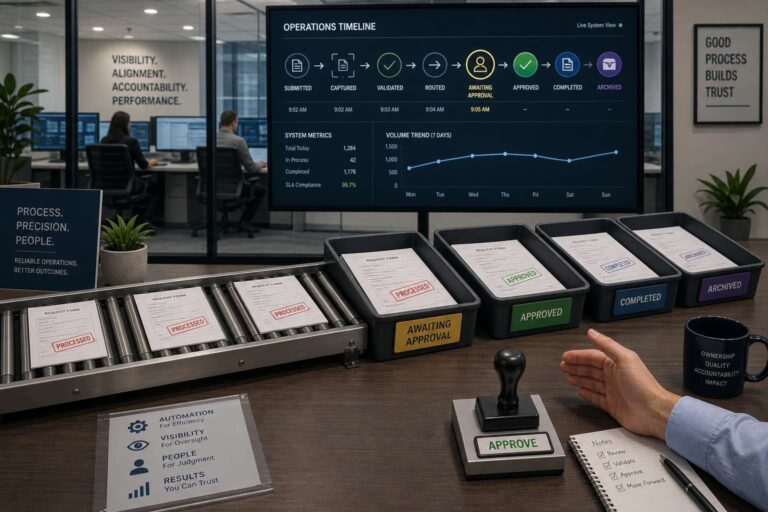
Mistral highlights several production use cases. In cargo release automation, a workflow validates shipping documents against customs rules, checks anomalies, requests human sign-off when needed, and resumes after approval using wait_for_input(). In document compliance checking, Mistral says the entire review process only takes minutes and Studio surfaces every step as a structured timeline you can drill into at any level of detail, down to specific traces with native support for OpenTelemetry. In customer support triage, incoming tickets are analyzed, categorized by intent and urgency, and routed automatically, while teams can correct routing errors at the workflow level without retraining the model.
The platform emphasizes durable execution, detailed observability, human-in-the-loop approvals, and enterprise controls. Workspaces in Studio separate teams and projects, while role-based access control (RBAC) enforces those boundaries consistently. Mistral also says the deployment model is flexible: the control plane runs on Mistral, while workers and data processing run in a customer environment, whether cloud, on-prem, or hybrid.
Under the hood, Workflows is built on Temporal’s durable execution engine and extended for Artificial Intelligence workloads with streaming, payload handling, multi-tenancy, and added observability. Mistral hosts the orchestration infrastructure, including the Temporal cluster, the Workflows API, and Studio, while customers deploy workers in their own Kubernetes environment through a separate Helm chart. The company says the Python SDK is the main way to write and run workflows, and v3.0 is now publicly available and installable with a single command.