
Microsoft Research Unveils New Tools for Renewable Energy, Medical Imaging, and Astronomy

Microsoft Research introduces innovative datasets and tools in renewable energy, medical imaging, and galaxy analysis.

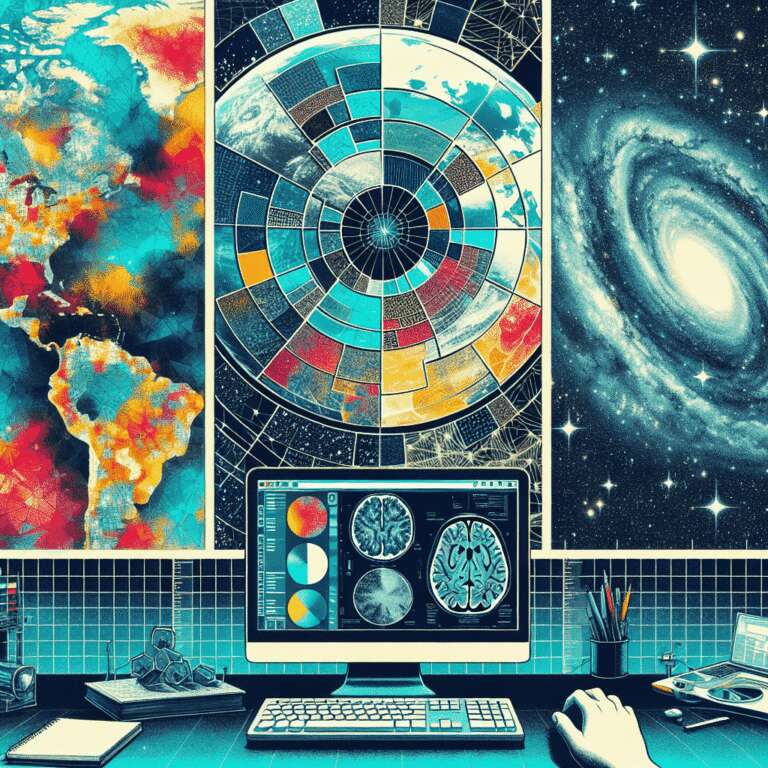
Microsoft Research has released several groundbreaking tools this week, aimed at solving various challenges across different sectors. The first is a comprehensive dataset to aid planners of renewable energy infrastructures globally. This ´Global Renewables Watch´ dataset uses satellite imagery to track and analyze the spatial distribution of solar photovoltaic farms and onshore wind turbines. Developed in collaboration with The Nature Conservancy and Planet, it covers over 13 trillion pixels, providing accurate site data, including construction dates and power capacity estimates. This will aid policymakers and researchers in implementing environmentally sound and efficient energy projects.

Additionally, Microsoft presents SNRAware, a cutting-edge training method for enhancing the quality of MRI images through advanced denoising techniques. Specifically designed to work with deep learning models, SNRAware improves the signal-to-noise ratio of MRI data, which is particularly beneficial for low-field MRI systems or when parallel imaging is applied. This innovation significantly enhances the clinical utility of MRI scans without compromising vital diagnostic details, showcasing broad applicability across various architectural models.

In astronomy, Microsoft introduces Mephisto, a pioneering Artificial Intelligence tool developed to expedite the analysis of distant galaxies observed by the James Webb Space Telescope. Mephisto interprets photometric data, proposes physical models, and integrates with galaxy spectral simulation programs to identify and rectify discrepancies in observational data. This tool, through iterative parameter adjustments, aims to untangle the complexities of galaxy formation and characteristics, potentially accelerating discoveries in the universe.
74

Impact Score

Microsoft previews Shader Model 6.10 for gpu Artificial Intelligence engines

Microsoft has introduced Shader Model 6.10 in AgilitySDK 1.720-preview with a new matrix API designed to unify access to dedicated gpu Artificial Intelligence hardware from AMD, Intel, and NVIDIA. The change is aimed at making neural rendering features easier to deploy across multiple vendors with a single programming model.

Europe’s Artificial Intelligence challenge is structural dependence

Europe has talent, research strength, and rising investment in Artificial Intelligence, but startups remain reliant on American infrastructure, platforms, and late-stage capital. The argument centers on digital sovereignty, interoperability, and ownership as the conditions for building durable European champions.

Community backlash slows Artificial Intelligence data center expansion

Political resistance, regulatory scrutiny, and rising energy and water concerns are complicating the build-out of large Artificial Intelligence data centers across the United States. The pressure is increasing costs, delaying projects, and adding fresh risks to the economics behind Generative Artificial Intelligence infrastructure.

House panel advances export controls after China report

The House Foreign Affairs Committee moved export control legislation after a House Select Committee report detailed China’s use of illegal means to build its Artificial Intelligence and semiconductor sectors. The measure is aimed at chip smuggling and Artificial Intelligence model theft.

Contact Us

Got questions? Use the form to contact us.

Contact Form

Clicking next sends a verification code to your email. After verifying, you can enter your message.