
Kazeta: new Linux OS transforms pcs into retro game consoles

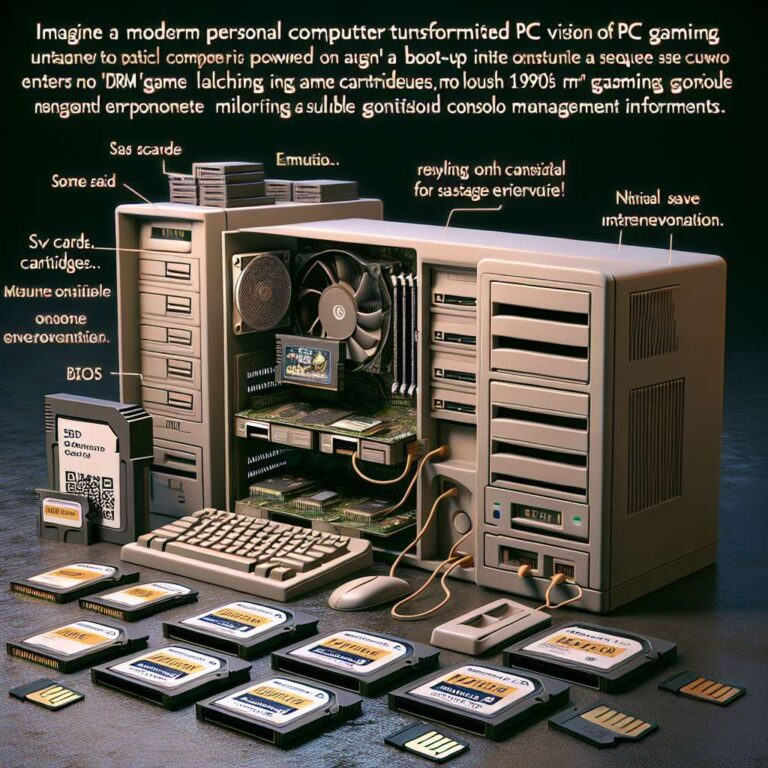
Kazeta is a Linux-based operating system that turns a pc into a cartridge-style retro console, booting DRM-free games from sd cards and keeping saves on internal storage. The project aims to remove storefront complexity and help preserve game collections through physical media.

Kazeta is a Linux-based operating system revealed by chimeraos developer Alesh Slovak after six months of development. The project is designed to bring back the simplicity of classic game consoles on a pc by using physical media and a cartridge-like workflow. It responds to growing frustration with complex digital storefronts and reflects Slovak´s renewed appreciation for physical media and concern for long-term game preservation.

The system operates by loading DRM-free games onto sd cards that function as cartridges. Users insert a card and power on the pc to boot directly into the game, removing the need for accounts, online requirements, and cloud dependencies. Game cartridges are kept read-only to preserve their content, while save data is stored on the device´s internal storage. When no cartridge is inserted, Kazeta displays a retro-style bios menu that lets users manage game saves in a way similar to 1990s consoles.

Kazeta supports both modern pc titles and older games through emulation, and it is intended to work with DRM-free content from sources such as GOG and itch.io. Slovak said he created the OS after observing non-tech-savvy users struggle with Steam´s complex layout and after growing tired of digital distribution himself. The project´s philosophy centers on simplicity, local ownership of games, and preserving playable copies through physical storage mediums.
65

Impact Score

Nvidia launches nemotron 3 nano omni for enterprise agents

Nvidia has introduced Nemotron 3 Nano Omni, a multimodal open model designed to support enterprise agents that reason across vision, speech and language. The launch extends Nvidia’s push beyond hardware into models and services while targeting more efficient agentic workflows.

Intel 18A-P node improves performance and efficiency

Intel plans to present new results for its 18A-P process at the VLSI 2026 Symposium, highlighting gains in performance, power efficiency, and manufacturing predictability. The updated node is positioned as a stronger option for customers seeking 18A density with better operating characteristics.

EA CEO defends broader Artificial Intelligence use in game development

EA CEO Andrew Wilson defended the company’s internal use of Artificial Intelligence after employee claims that the tools were slowing work rather than helping. He framed the technology as an aid for repetitive quality assurance tasks, even as concerns persist over its broader impact on development.

Generative Artificial Intelligence is reshaping cybercrime less than feared

Research into criminal underground forums suggests generative Artificial Intelligence is being used mainly as a productivity tool rather than a transformative criminal breakthrough. The biggest near-term risks may come from automation, fraud support, and attackers adapting content to influence chatbot outputs.

Contact Us

Got questions? Use the form to contact us.

Contact Form

Clicking next sends a verification code to your email. After verifying, you can enter your message.