
Intel produces chips for apple and nvidia as foundry capacity tightens

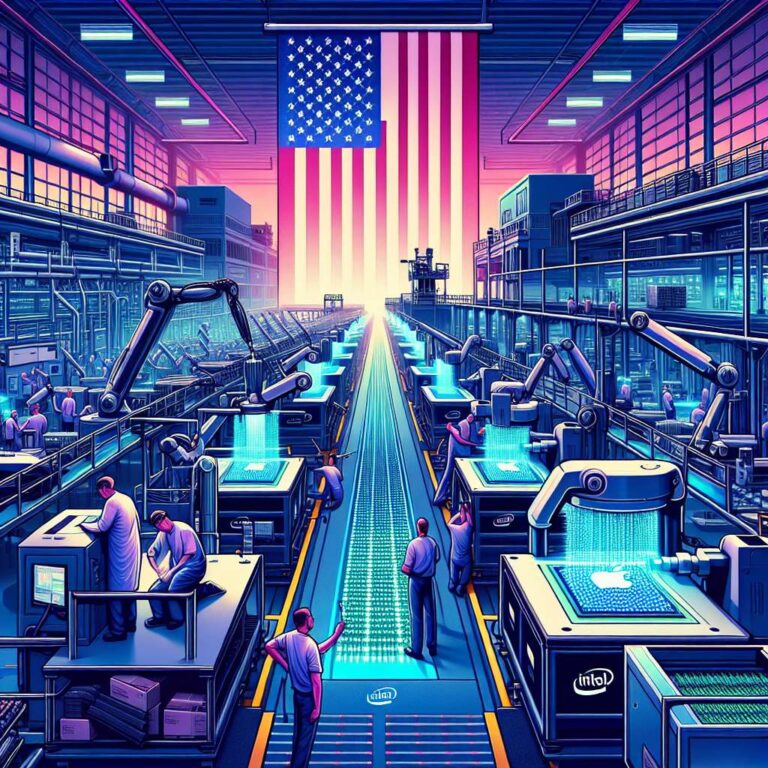
Intel is positioned to manufacture chips for apple and nvidia as capacity constraints challenge established contract chipmakers and geopolitical dynamics shift government support toward domestic production.

Intel is described as producing chips for apple and nvidia at a time when foundry capacity is under strain, highlighting a shift in the semiconductor supply landscape. The article states that Intel is backed by the United States government, and this support is framed as a factor helping the company secure new chip orders amid geopolitical uncertainty. The narrative positions Intel as a beneficiary of these conditions as large technology firms look for additional manufacturing partners.

The article notes that traditional contract chipmaking capacity, including that of major players facing high utilization, is experiencing pressure, which is creating openings for alternative manufacturers. Within this context, Intel is said to be taking on production for companies such as apple and nvidia, although specific product lines or process nodes are not detailed in the available text. The piece implies that this shift could diversify supply away from a single dominant foundry model.

Samsung is mentioned as targeting “130% AI semiconductor growth” as it also seeks to capture more demand related to artificial intelligence chips and compete for similar customers. The reference to “130% AI semiconductor growth” indicates an aggressive ambition to expand in this segment, though the article does not provide a timeframe or baseline for that figure. The text suggests that if mass production at these alternative manufacturers scales successfully, the balance of power in global chip production could gradually broaden beyond the current concentration at a single leading foundry.
55

Impact Score

Elias Thorne shows how AI models converge on the same story

A Cornell University preprint traces the strange rise of Elias Thorne, a fictional lighthouse keeper that keeps appearing in AI-generated stories. The pattern may stem from recycled training data and alignment choices that favor bland, low-risk characters.

DUDE Wipes finds AI gains in logistics and hiring

DUDE Wipes is using AI across operations, marketing and hiring as brands face tougher questions about returns from generative tools. The company points to supply chain automation as one area producing measurable time savings.

Nvidia readies Grace CPU for AI systems beyond x86

Nvidia is developing Grace, its first data center CPU, to link more tightly with its GPUs as AI model sizes grow. The Arm-based chip is aimed at future systems where CPU-to-GPU bottlenecks become a bigger constraint.

AI labeling rules raise questions for newsrooms

New York and EU policy efforts are pushing AI disclosure into news and public-interest content. The hardest unresolved issue is how to label work shaped by both human judgment and AI systems.

Rail weighs AI benefits against assurance risks

AI could improve rail operations, safety monitoring and documentation work, but rail deployments need stronger safeguards than generic tools provide. Human validation, traceability and secure handling of sensitive data remain central concerns.

Contact Us

Got questions? Use the form to contact us.

Contact Form

Clicking next sends a verification code to your email. After verifying, you can enter your message.