
INSAIT achieves breakthrough at CoRL 2025 artificial intelligence and robotics conference

Bulgaria’s INSAIT was one of only two teams selected for RoboArena at CoRL 2025 in Seoul, where its model outperformed leading systems trained on far more data. The institute also unveiled MotoVLA, a method for teaching robots from real-world observations and video.

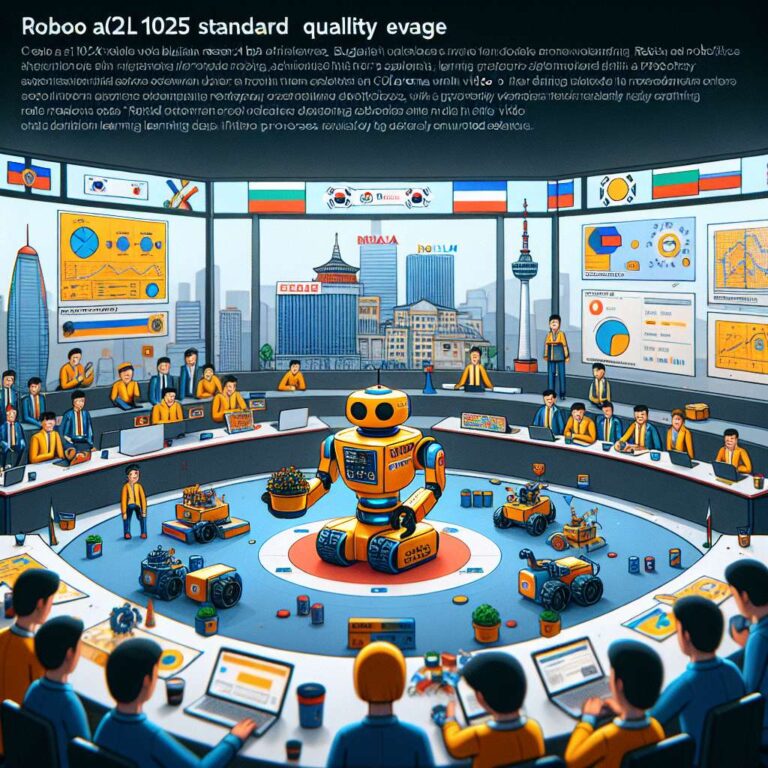
INSAIT, part of Sofia University “St. Kliment Ohridski,” reported a landmark result at CoRL 2025 in Seoul, becoming one of only two teams to qualify for RoboArena, an international challenge designed to evaluate the latest Artificial Intelligence models in robotics. The initiative was organized by researchers from Stanford University, the University of California, Berkeley, and other leading institutions. The selection underscores INSAIT’s growing profile and places Bulgaria in a high-visibility position within the global robotics research community.

According to the announcement, INSAIT’s model produced standout performance, surpassing some of the most powerful existing solutions that were trained on ten times more data. The comparison included the pi0 model from Physical Intelligence, a Stanford University startup that secured initial funding from Jeff Bezos and OpenAI. INSAIT said it intends to officially release its model soon, signaling an effort to contribute tools and benchmarks that could be adopted across the robotics field.

Alongside the competition showing, INSAIT presented MotoVLA, a research approach aimed at expanding how robots learn. Rather than relying solely on pre-prepared datasets, MotoVLA allows learning through observation of real environments and video. The team frames this as a pathway to more flexible and generalizable robotic systems that can adapt to varied conditions outside controlled training sets.

The work was credited to researchers Alexander Spiridonov, Nikolay Nikolov, and Giuliano Albanese, who represented Bulgaria at the conference. INSAIT positions these results as evidence that Bulgaria is establishing itself as a contributor to the global development of Artificial Intelligence for robotics. The combined competitive performance and methodological advance suggest momentum for the institute as it prepares a public release of its model and continues to develop learning frameworks such as MotoVLA.
55

Impact Score

Europe’s Artificial Intelligence challenge is structural dependence

Europe has talent, research strength, and rising investment in Artificial Intelligence, but startups remain reliant on American infrastructure, platforms, and late-stage capital. The argument centers on digital sovereignty, interoperability, and ownership as the conditions for building durable European champions.

Community backlash slows Artificial Intelligence data center expansion

Political resistance, regulatory scrutiny, and rising energy and water concerns are complicating the build-out of large Artificial Intelligence data centers across the United States. The pressure is increasing costs, delaying projects, and adding fresh risks to the economics behind Generative Artificial Intelligence infrastructure.

House panel advances export controls after China report

The House Foreign Affairs Committee moved export control legislation after a House Select Committee report detailed China’s use of illegal means to build its Artificial Intelligence and semiconductor sectors. The measure is aimed at chip smuggling and Artificial Intelligence model theft.

Intel repurposes scrap dies to expand CPU supply

Intel is repurposing wafer-edge and lower-yield silicon that would normally be discarded into sellable CPUs as industry demand outpaces supply. The strategy reflects a market where customers are willing to buy lower-tier parts to secure any available capacity.

Contact Us

Got questions? Use the form to contact us.

Contact Form

Clicking next sends a verification code to your email. After verifying, you can enter your message.