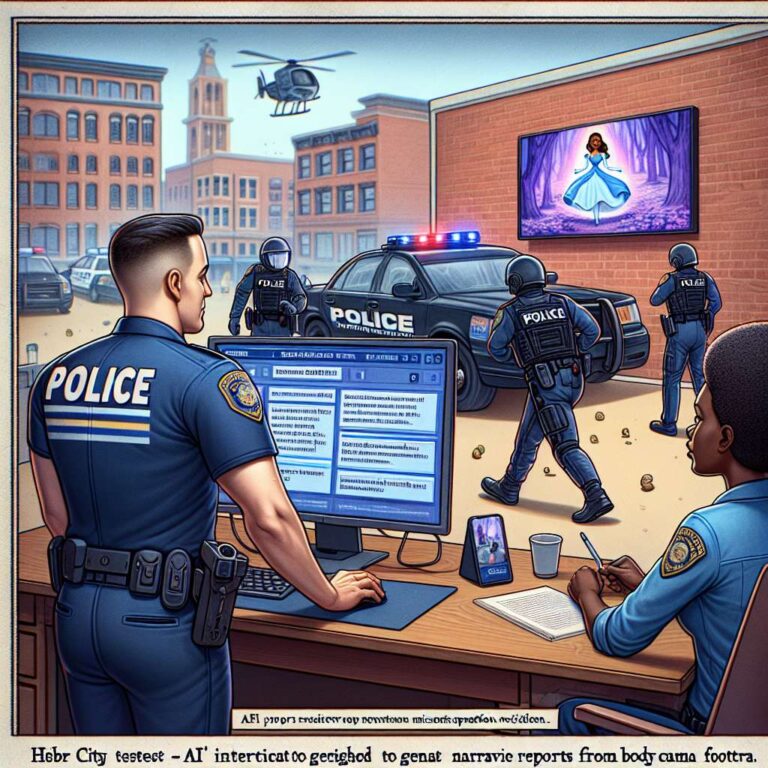
Heber City police are piloting Artificial Intelligence tools to streamline report writing, after one of the systems produced an unusual error claiming an officer had transformed into a frog. Sgt. Keel explained that the body camera software and the Artificial Intelligence report writer misinterpreted audio from a television playing “The Princess and the Frog” in the background, pulling fictional details into a real report. He said this highlighted the importance of officers carefully reviewing and correcting any Artificial Intelligence generated documentation before it becomes part of an official record.
Earlier this month, the department began testing two pieces of Artificial Intelligence software, Draft One and Code Four, which are designed to generate narrative reports directly from body camera footage. Code Four was created by George Cheng and Dylan Nguyen, both 19 years old and described as MIT dropouts, and the product was kicked off earlier this year with a focus on reducing paperwork and putting officers back into the field. Draft One was the system that produced the Disney inspired report, while Code Four was showcased in a ride along demonstration where Sgt. Keel conducted a mock traffic stop so the station could observe how the software builds a report with timestamps from recorded interactions.
Back at the station, the software produced a structured report that included timestamps and recognized both English and Spanish dialogue, while also tracking tone and sentiment as people were speaking. Keel said one of the major advantages is time savings, because he said writing reports typically takes 1-2 hours. He added that “I’m saving myself about 6-8 hours weekly now” and described the system as user friendly even for someone who does not see himself as particularly tech savvy. Code Four costs about $30 per officer each month, and Keel said the trial run for Code Four wraps up next month, but department leaders say they intend to keep using Artificial Intelligence powered report tools and are now deciding which system best fits their needs.