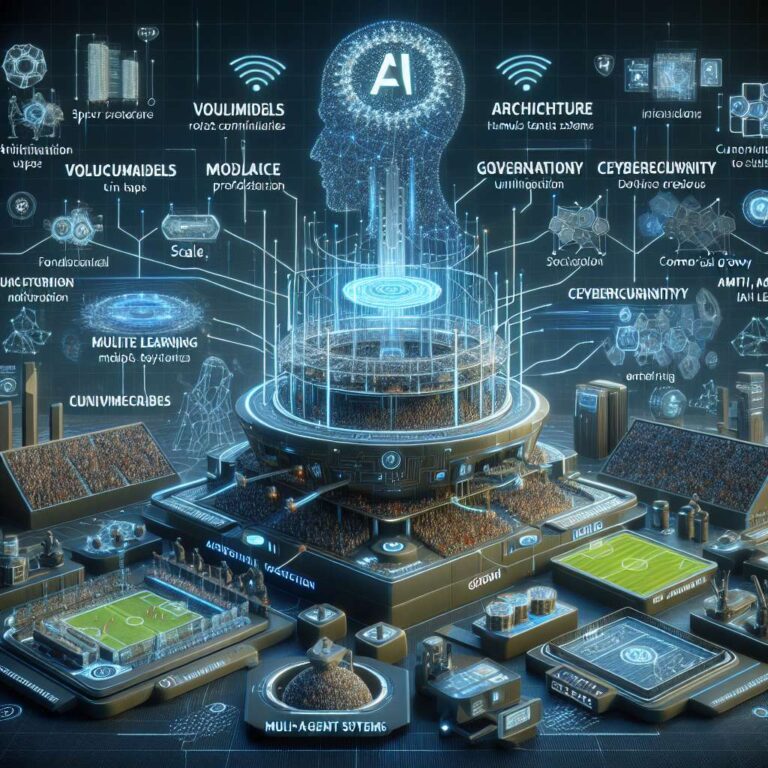
Globant, LALIGA, and Sportian presented a shared vision for agentic Artificial Intelligence in sports at NVIDIA GTC 2026, framing Artificial Intelligence as a core operational layer rather than a collection of isolated experiments. The companies said the sports industry’s first full-scale agentic Artificial Intelligence ecosystem is already in use at LALIGA, where Globant’s Artificial Intelligence Pods subscription model supports organizational transformation. The platform is used by over 50 departments to improve decision clarity, expand analytics capabilities and enhance creativity.
The central message focused on enterprise deployment challenges beyond model development. Orchestration, governance, cybersecurity, and scale were identified as the main requirements for safe and effective implementation. LALIGA’s approach treats Artificial Intelligence as infrastructure, similar to cloud or data platforms, with a control plane for security and orchestration. That structure has helped the league move from isolated pilots to over 500 active models operationalized at scale. The companies also emphasized that agentic systems are most effective when paired with human oversight, with tools such as Sportian’s Calendar Selector helping teams evaluate complex match-day scenarios while keeping final decisions in human hands.
The operational scale described in the session was significant. Over 500 machine learning models are in production, processing more than 816 terabytes of sports data and supporting more than 5.5 million concurrent users. Multi-agent systems are forecasting demand and optimizing factors such as match calendars and ticket pricing, which has seen matchday revenue increases of up to 25% while also driving increased stadium attendance. Artificial Intelligence-driven analytics within Sportian Performance process millions of in-game data points and thousands of real-time metrics per match, supporting on-pitch decision-making and the viewer experience.
The companies also tied Artificial Intelligence deployment to media and commercial growth. Artificial Intelligence-powered insights and content generation are supporting stronger audience engagement and a media rights business that now exceeds €1B annually in Spain alone. During the panel, Globant said this model offers a technical blueprint for organizations seeking to bridge the gap between Artificial Intelligence experimentation and measurable business impact. Speakers included Carolina Dolan Chandler of Globant, Javier Gil of LALIGA, and Gonzalo Zarza of Sportian.