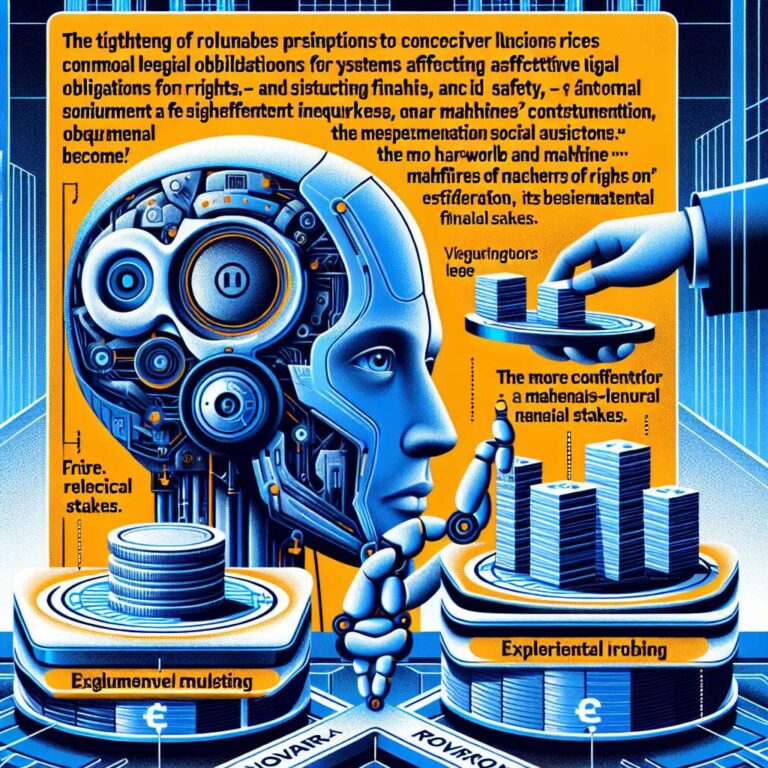
In 2025, artificial intelligence safety moved from being a largely research-driven topic to a concrete legal reality, as lawmakers in the european union, united states and united kingdom shifted from voluntary principles to binding rules for high-risk artificial intelligence systems. The article explains that regulators are targeting models and applications that can affect rights, safety, critical infrastructure or large financial decisions, and it notes that the core idea is that the more powerful and high-risk the artificial intelligence system, the stronger the requirements around testing, monitoring, documentation and human oversight. For developers, startups and experimental experiences such as novaryonai, this means artificial intelligence cannot be treated as “just a game” when people’s opportunities, money, health, freedom or rights may be affected.
The piece highlights how the european union’s artificial intelligence act introduces a risk-based framework, dividing systems into prohibited uses such as certain kinds of social scoring, high-risk artificial intelligence systems with strict obligations, limited-risk systems with transparency duties and minimal-risk systems with almost no extra regulation. High-risk systems must undergo conformity assessments, keep detailed technical and training documentation, log their behaviour and enable effective human intervention, which pushes game-like experimentation platforms to be clear about their purpose, limits and non-financial nature. In the united states, federal agencies are expanding the use of existing consumer protection, discrimination and safety laws to cover artificial intelligence systems, while voluntary safety commitments by large labs are solidifying into expectations around red-teaming, incident reporting and risk disclosure.
According to the article, the united kingdom is continuing a “pro-innovation” path while building artificial intelligence safety specialised regulators and expert units, with particular attention to frontier-scale foundation models, artificial intelligence used in critical infrastructure and systems that can generate realistic misinformation at scale. It summarises shared elements in defining “high-risk” across jurisdictions as impact on safety, rights or large financial and social outcomes, the level of autonomy over decisions and the scale of people affected. Novaryonai is framed as a logic-based artificial intelligence challenge and experimental decision gate rather than a financial service or gambling platform, with a “guardian” artificial intelligence evaluating a single sentence from the player using internal logic and linguistic criteria, without any random number generator, roulette wheel or slot machine, and with a deterministic decision feeding a growing “treasure pool” that reflects difficulty. The design is presented as aligned with modern artificial intelligence safety expectations through clear rules, transparent intent, explicit separation from real-world financial decision-making, focus on logic and persuasion rather than chance, and visible limits to the system’s role. Looking ahead to foundation models approaching agi-level reasoning and more complex artificial intelligence-driven games, the article suggests regulators will keep pressing on responsibility for harmful decisions, pre-release testing and the ability of users to understand and challenge outcomes, and it stresses that organisations deploying real-world high-risk artificial intelligence systems should seek specialised legal and compliance advice.