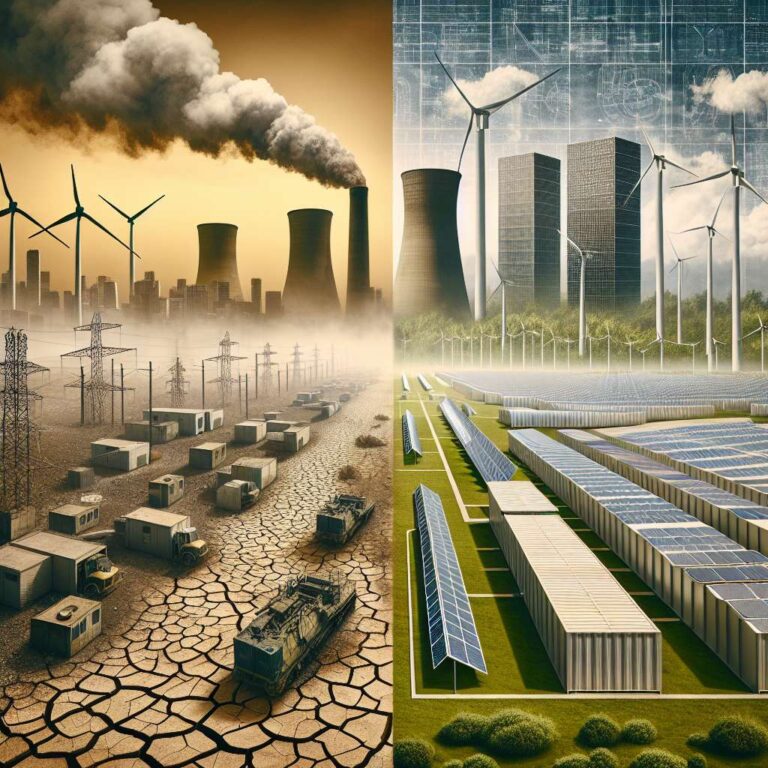
Climate impacts accelerated in 2025, with global greenhouse-gas emissions hitting record highs again and this year set to be either the second or third warmest on record, while climate-fueled disasters like wildfires in California and flooding in Indonesia and Pakistan caused billions in damage. The situation worsened politically as the US under the Trump administration withdrew from the Paris Agreement, cut funds for climate research, and scrapped billions of dollars in funding for climate tech projects. Even in this context, climate reporters highlighted several bright spots that suggest meaningful progress is possible, particularly in major emitting economies and key clean energy technologies.
One of the most striking developments came from China, the world’s second-biggest economy and largest climate polluter, which managed to keep carbon dioxide emissions flat for the last year and a half while its economy is on track to grow about 5% this year and electricity demands continue to rise. China added 240 gigawatts of solar power capacity and 61 gigawatts of wind power in the first nine months of the year, a surge that is nearly as much solar power as the US has installed in total. This rapid buildout of solar, wind, and electric vehicles has started to decouple economic growth from emissions, suggesting an emerging model in which an industrial economy can expand without increasing the amount of carbon dioxide it pumps into the atmosphere, even if China is still not moving fast enough to meet relatively safe temperature targets.
In the US, batteries for grid storage are scaling at a pace that surpasses earlier expectations, transforming how electricity systems operate. Back in 2015, the battery storage industry had installed only a fraction of a gigawatt of battery storage capacity across the US and set a goal of adding 35 gigawatts by 2035, but the sector passed that goal a decade early this year and then hit 40 gigawatts a couple of months later. Costs are also declining; this year, battery prices for electric vehicles and stationary storage fell again to a record low, and battery packs used for grid storage saw prices fall even faster, costing 45% less than last year. In places like California and Texas, these batteries are already soaking up cheap solar power and discharging in the evenings, reducing the need to run natural-gas plants and contributing to a cleaner, more stable grid.
The boom in Artificial Intelligence is increasing electricity demand, with the amount of power utilities supplied to US data centers jumping 22% this year and projected to more than double by 2030, but it is also spurring investment in next-generation energy technologies. Much of the near-term energy for Artificial Intelligence data centers will likely come from fossil fuels and new natural-gas power plants, yet tech giants with emissions reduction goals are funding alternatives. Meta signed a deal with XGS Energy in June to purchase up to 150 megawatts of electricity from a geothermal plant, and Google signed an agreement in October to help reopen the Duane Arnold Energy Center in Iowa, a previously shuttered nuclear power plant. These moves suggest that geothermal and nuclear, which can provide constant power in a way that wind and solar do not, could become increasingly important components of future grids as more money and interest flow from powerful corporate players.
Finally, global warming projections underscore both progress and stagnation in collective climate action. The world is on track for about 2.6 °C of warming over preindustrial conditions by 2100, according to Climate Action Tracker, compared with the 3.6 °C path that the world was on a decade ago just before nearly 200 countries signed the Paris deal. This shift resulted from nations passing emissions mandates, funding subsidies, investing in research and development, and from private industry ramping up production of solar panels, wind turbines, batteries, and electric vehicles. However, Climate Action Tracker notes that its warming projections have remained fixed for the last four years, reflecting that countries have largely failed to take the additional actions needed to bend the curve closer to the 2 °C goal, even though shaving off a degree of danger shows that coordinated global efforts can yield real, measurable climate benefits.