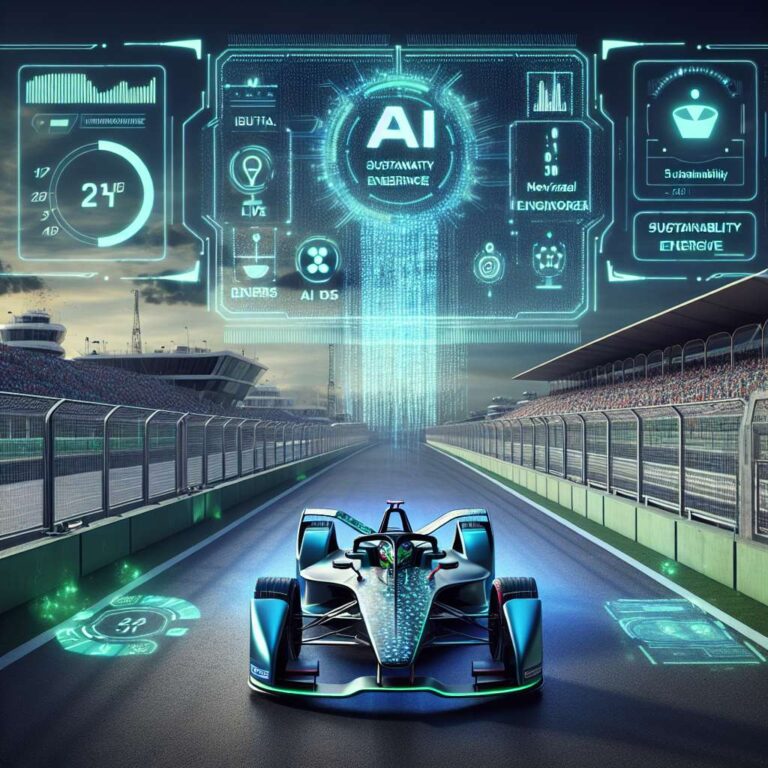
The ABB FIA Formula E World Championship launched its first all-electric race in Beijing’s Olympic Park in 2014, when batteries could not last a full race and drivers had to switch cars mid-competition. Just over a decade later, the series has become a global entertainment brand with 10 teams, 20 drivers, and broadcasts in 150 countries, and its technology has progressed to the point that the coming Gen4 car is expected to deliver acceleration in line with Formula One and be “actually faster, it’s actually more than traditional ICE.” Alongside technical evolution on track, the fan base has shifted to a younger, more gender-diverse audience that expects personalized, always-on digital experiences rather than a single, one-size-fits-all race broadcast.
To meet those expectations, Formula e has partnered with Infosys on an artificial intelligence-powered transformation that treats “elevated fandom” as a central product. Infosys is helping Formula e pursue a target to reach 500 million fans by 2030 by building a platform that tailors content to individual interests, whether that is driver rivalries, sustainability narratives, or battery performance. In April 2025, the organizations launched the Stats Centre, built on Infosys Topaz, which uses artificial intelligence to convert complex race telemetry into interactive stat cards, timelines, and conversational insights. A forthcoming Race Centre will add live leaderboards, 2D track maps that show every driver’s position, overtakes and attack mode timelines, prediction games for podium finishes, voting for driver of the race, and artificial intelligence generated commentary, supported by video explainers to help new fans understand rules, strategies, and car technology.
Artificial Intelligence is also reshaping Formula e’s core operations, from broadcast production to logistics and sustainability. In the TV product, artificial intelligence techniques interpolate between frames so any standard camera can deliver super slow-motion footage, while other tools transcribe team radio and distinguish between drivers and engineers, tasks that would otherwise require “a team of 24 people on stenographers.” On the business side, Formula e, which has “been the only sport with a certified net-zero pathway,” uses machine learning and artificial intelligence to optimize freight and travel decisions, such as whether a battery should be flown or sent by sea, and to refine its biggest emissions source, freight that is “probably akin to one Formula One team.” Remote broadcast production now streams every camera feed to a London hub over dual and diverse internet connections, slashing the need to fly “a hundred plus people” to each race, reducing carbon output and unintentionally improving workforce diversity by allowing staff with families or caregiving responsibilities to participate without constant travel.
Infosys is underpinning these moves with an artificial intelligence enabled cloud data backbone that supports real-time insights alongside secure, scalable operations. The company has built sustainability data tools so “every watt of energy, every logistic decision, every material use can be tracked” and applies predictive analytics to model how changes in race logistics or battery technology will affect emissions, helping Formula e pursue a goal to cut carbon by 45%. At the same time, both partners are navigating challenges brought by the rise of artificial intelligence, including the erosion of traditional search engine optimization as foundational models lag behind Formula e’s fast-changing reality, and heightened cybersecurity risks as attackers gain access to the same tools. Formula e is responding by strengthening first-party content and “earned media” to feed accurate data into generative systems, while trying to balance security with a culture of experimentation.
Internally, artificial intelligence has flipped the dynamic of technology adoption, with staff now “banging on our door because they want to use this tool, they want to use that tool,” turning the chief technology and information officer role into one of “continual transformation.” Looking ahead, Formula e is entering the final season of its Gen3 car with 10 teams on the grid, while preparing to launch the Gen4 car in 2026 for season 13, which executives believe will be “a game changer in how people perceive electric motor sport and electric cars in general.” For both Formula e and Infosys, the partnership is framed as a way to prove that an all-electric racing series can be simultaneously cutting edge, data-driven, and climate-conscious, with a shared ambition to make Formula e “the most digital and sustainable motor sport in the world” where “the future is electric, and with AI, it’s more engaging than ever.”