Artificial Intelligence-powered coding tools have moved from novelty to near ubiquity, with executives touting them as a way to overcome human bottlenecks and even predicting that within six months 90% of all code would be written by Artificial Intelligence. Major companies such as Microsoft and Google say that around a quarter of their code is now Artificial Intelligence-generated, and a 2025 Stack Overflow survey reports that 65% of developers use these tools at least weekly. Recent advances have turned simple autocomplete helpers into sophisticated agents that can analyze entire code bases, fix bugs, and autonomously work on software for more than 30 hours without major performance degradation, with leading models’ scores on the SWE-bench Verified benchmark rising from 33% to above 70% in a year. Yet interviews with more than 30 practitioners and a growing body of research reveal a far more complicated reality than headline productivity claims suggest.
Vendor studies from GitHub, Google, and Microsoft found developers completing tasks 20% to 55% faster, but independent analyses paint a murkier picture. GitClear data indicates that engineers are producing roughly 10% more durable code since 2022, while simultaneously registering sharp declines in several measures of code quality. A July study by Model Evaluation & Threat Research showed that while experienced developers believed Artificial Intelligence made them 20% faster, tests showed they were actually 19% slower, a result echoed by developer Mike Judge’s own six-week experiment in which Artificial Intelligence slowed him down by a median of 21%. Developers say tools excel at boilerplate, tests, debugging, and onboarding explanations, but struggle with large code bases because of limited context windows, inconsistency with existing conventions, and polished-looking yet incorrect outputs. This mix leads to slot-machine dynamics, where memorable “jackpot” successes obscure the time spent coaxing tools through dead ends, especially on unfamiliar tasks.
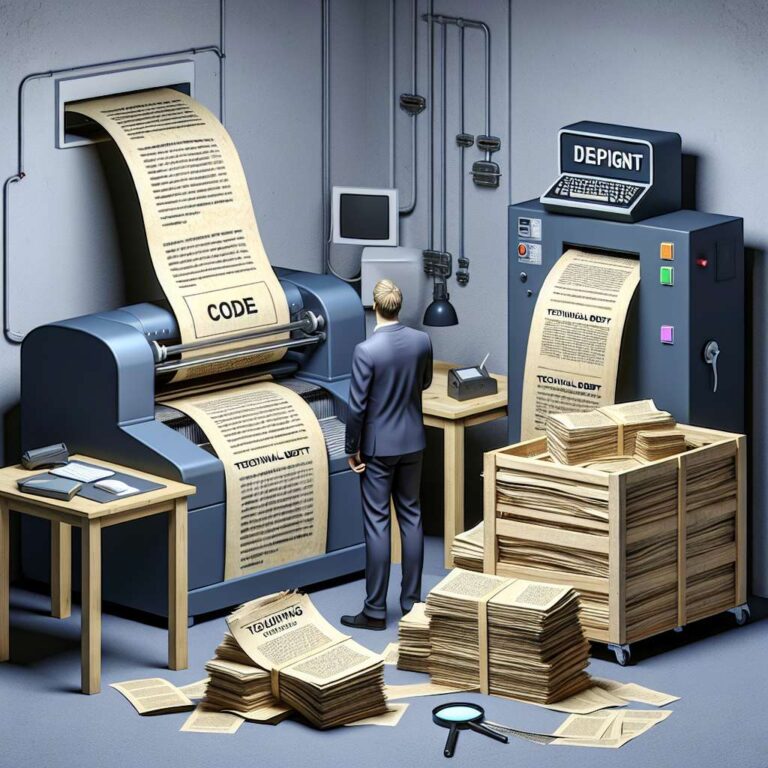
These limitations are contributing to mounting technical debt and new security worries. GitClear has observed a rise in copy-pasted code and a decline in code cleanup activity since 2020, while Sonar reports that more than 90% of issues in code from leading Artificial Intelligence models are subtle “code smells” rather than obvious bugs or vulnerabilities, raising fears of a false sense of security. Security researchers warn that harder-to-maintain code bases are more likely to become insecure over time and highlight risks such as hallucinated software packages that attackers can weaponize and data-poisoning attacks that can plant back doors with as few as 250 malicious documents. Despite this, usage keeps climbing, and some teams report transformational gains: Coinbase cites speedups of up to 90% on simpler tasks, and individual developers say that with months of experimentation, strict design patterns, and intensive review, they can have 90% of their code Artificial Intelligence-generated or build 100,000-line systems largely by prompting. At the same time, organizations struggle with uneven impact across teams, review bottlenecks as junior developers produce more code, and a narrowing talent pipeline, with one Stanford study finding employment among software developers aged 22 to 25 fell nearly 20% between 2022 and 2025. Many developers also worry that overreliance on tools erodes their instincts and strips away the parts of programming that drew them to the field in the first place.
As models evolve rapidly, providers are adding planning modes, context-management strategies that approximate “infinite” context windows, and multi-agent orchestration, while researchers explore approaches like “vericoding,” which aims to pair generated code with formal mathematical proofs of correctness, and novel paradigms such as “disposable code,” where components are generated independently and connected via APIs. Advocates argue that, over time, humans will shift from line-level coding to higher-level architecture and specification work, while critics emphasize the growing burden of technical debt, security exposure, and skills atrophy. The emerging consensus is not that Artificial Intelligence coding is wholly good or bad, but that its impact depends heavily on task type, engineering culture, guardrails, and how organizations adapt their processes, training, and expectations to a fundamentally different way of building software.