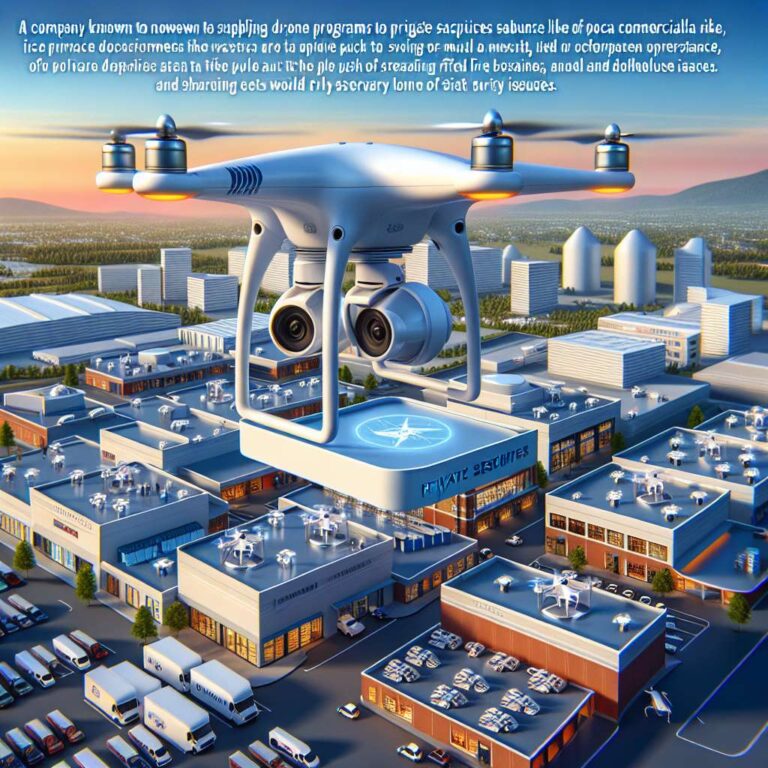
Flock Safety, known for supplying drones to police departments, is expanding into private-sector security, targeting use cases such as retail theft prevention. Companies in the United States can install Flock’s rooftop drone docking stations and, with a Federal Aviation Administration waiver for beyond visual line of sight flights, operate drones within a radius of a few miles. Keith Kauffman, a former police chief who now runs Flock’s drone program, said the private offering mirrors police deployments but swaps a 911 trigger for an alarm from a business.
In a typical retail scenario described by Kauffman, a security team that observes suspected shoplifters leaving a store could launch a camera-equipped drone to follow the individuals to their vehicle and continue tracking the car with a click of a button. Live video could be monitored by the company’s security team and, if configured, automatically shared with local police. The move follows the rise of drone-as-first-responder programs in law enforcement, which Flock has helped popularize. Police agencies have cited successes, including delivering supplies to a lost boy in the Colorado wilderness, though such deployments have also raised concerns about privacy, overpolicing in minority neighborhoods, and disputes over public access to drone footage.
Commercial traction remains early. Flock says it is in talks with large retailers but has not signed contracts. The only named private customer so far is Morning Star, a California tomato processor using drones to secure distribution facilities. The company plans to pitch hospital campuses, warehouse sites, and oil and gas operations. Regulatory uncertainty looms as the FAA drafts new rules for beyond visual line of sight approvals, and it is unclear whether Flock’s private use cases will fit within the proposed framework.
Civil liberties advocates warned that the expansion risks amplifying surveillance. Rebecca Williams, senior strategist for the ACLU’s privacy and data governance unit, called the shift a logical step in the wrong direction, citing the erosion of Fourth Amendment protections as governments purchase private data they would otherwise need a warrant to obtain. She argued that stalled legislative attempts to curb this practice, combined with Flock’s broader surveillance tools such as license plate readers used by local police and accessed by federal immigration agencies, could intensify harms. Williams labeled Flock “the Meta of surveillance technology” and described the expansion as very scary.