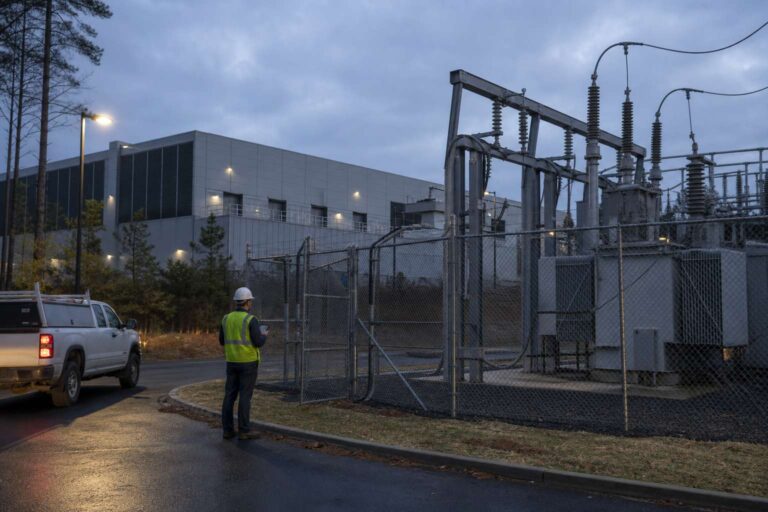
Emerald AI is preparing to deploy its Conductor software at a new facility in Virginia’s Data Center Alley with Nvidia and Digital Realty, aiming to show that data centers can reduce electricity use when the grid is under stress while keeping priority workloads running. The system was tested in simulations including a UK demand surge during the 2020 Euro tournament, when millions of kettles would have sharply raised electricity demand.
Grid flexibility has become a possible answer to a major constraint on AI infrastructure: power connections can take far longer than data center construction. PJM needs eight years to bring new generation online, according to RMI. A 2025 Duke University report found the US grid could support an additional 76 gigawatts for facilities willing to cut usage just 0.25% of the time, or about 22 hours a year. A separate Princeton-linked study found a 500-megawatt facility able to flex for less than 1% of the year could begin full operation three to five years faster than an inflexible one.
Other companies are pursuing related approaches, including GridCare’s digital grid modeling, Google’s workload shifting, and Voltus’s virtual power plant programs. Critics argue flexibility is an optimization tool, not a substitute for new generation, transmission, and distribution. PJM’s market monitor warned that relying on large data centers to reduce demand without enforceable controls amounts to magical thinking.