
Intel starts risk production on 18A-P for Diamond Rapids Xeon

Intel has introduced 18A-P, a refined foundry node planned for its next-generation Xeon Diamond Rapids server processor. The update targets higher performance, lower power use, and improved thermal behavior versus Intel 18A.

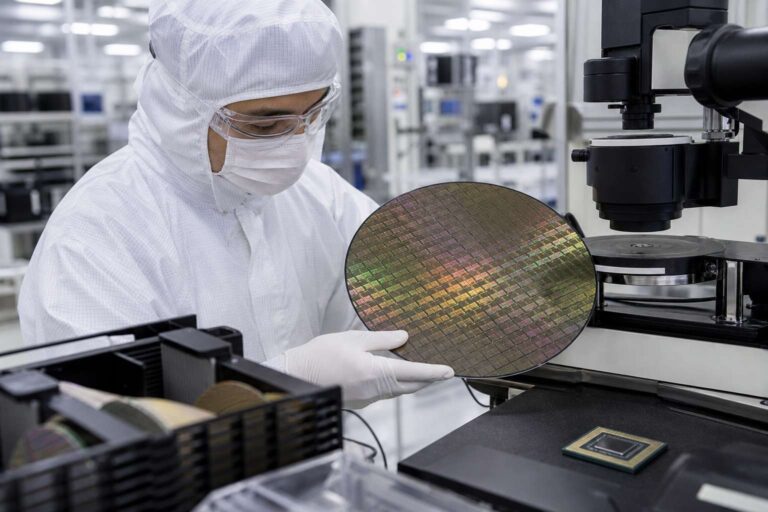
Intel unveiled the Intel 18A-P foundry node at the VLSI Symposium in Hawaii, positioning it as a refinement of Intel 18A for future server silicon. The company said it has begun risk-production on the node and plans to use it for the next-generation Xeon Diamond Rapids processor.

Intel claims 18A-P delivers a 9% increase in performance at iso-power and an 18% power reduction at iso-performance. The node is also said to improve die-level thermal resistance by 20-40% and Via resistance in performance-critical layers by 10-30%.

The gains come from physical and design-tool updates to the Intel 18A platform. Intel added new cell options across its 180HP and 160HD libraries, including W1 and W1.5 cells for low-power designs and a W3P cell with a dual contact design for higher-performance needs without exceeding the footprint of the existing W3 cell. The company also integrated a new heat-conducting material on the front side of the die and updated its EDA tools to support thermally-aware layouts.
52

Impact Score

Lexar tests SSD offloading for local AI models

Lexar is developing an AI-focused SSD approach that shifts some local model workloads from DRAM to NAND Flash. Internal tests point to lower memory requirements for running larger models on consumer PCs.

NVIDIA Blackwell leads MLPerf Training 6.0 results

NVIDIA’s Blackwell platform posted the fastest time to train across all seven MLPerf Training 6.0 benchmarks, including new mixture-of-experts workloads. Submissions also showed large-scale runs on GB200 NVL72 and GB300 NVL72 systems.

Coherent expands Texas photonics plant for AI infrastructure

Coherent broke ground on an expanded Sherman, Texas, manufacturing building for optical components used in AI data centers. NVIDIA’s Jensen Huang joined Coherent CEO Jim Anderson to highlight the role of photonics in scaling accelerated computing.

AI regulators tighten rules as Anthropic passes OpenAI

European, UK and US authorities are moving toward more targeted oversight of high-risk systems, child safety and frontier models. Anthropic’s latest raise underscores how rapidly capital is concentrating around leading model developers.

Contact Us

Got questions? Use the form to contact us.

Contact Form

Clicking next sends a verification code to your email. After verifying, you can enter your message.