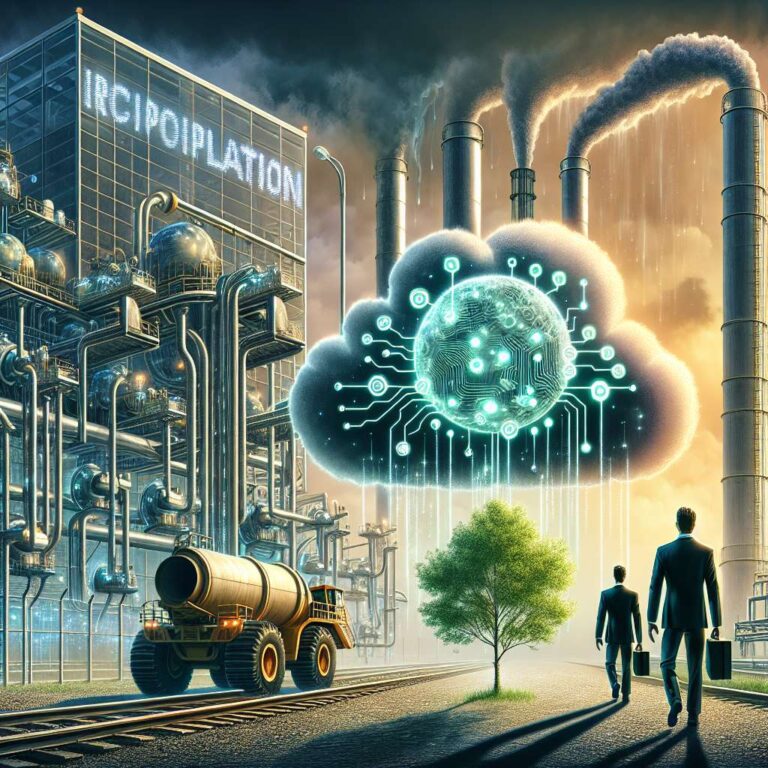
Will and Holly Alpine, a Seattle-based couple who worked in Microsoft’s responsible Artificial Intelligence and sustainability divisions, left the company to protest its partnerships with oil and gas producers. After raising concerns internally for years about how Microsoft’s technology was aiding fossil fuel expansion, they concluded they could have more impact from the outside. In early 2024 they launched the Enabled Emissions Campaign to spotlight how Big Tech tools contribute to higher fossil fuel output and to push for limits on those deals. Microsoft declined to comment; the company has pledged to be carbon negative by 2030.
The Alpines argue that Microsoft’s reported emissions miss a major piece of the picture. The company’s latest figures show overall emissions rose 23.4% between 2020 and 2024, but the couple says these totals do not include “enabled emissions” from increased oil and gas production driven by efficiency gains from Microsoft’s technology. A 2019 Microsoft press release said an ExxonMobil subsidiary’s use of Microsoft cloud, Internet of Things, and machine learning tools was expected to expand production by up to 50,000 oil-equivalent barrels per day by 2025. Modeling from the Green Web Foundation equated that to 6,356,475 metric tonnes of CO2 in one year, more than half of Microsoft’s entire 2019 footprint, on a single contract. Microsoft’s ties are part of a wider industry pattern: Amazon has worked with drillers to simulate output, while Google pledged in 2020 to stop selling its machine learning platform for oil exploration use cases after employee backlash.
The Alpines say Artificial Intelligence is accelerating this trend. Citing a 2020 Barclays report, they note Artificial Intelligence could increase fossil fuel production by 10% to 15% by improving recovery rates, and argue that generative Artificial Intelligence has further scaled these capabilities. Their campaign urges Big Tech firms to measure and disclose enabled emissions, not just operational footprints, and to draw “lines in the sand,” including no Artificial Intelligence or cloud contracts that explicitly expand fossil fuel production.
Leaving Big Tech meant trade-offs. The couple cut living costs, lean into the sharing economy, buy secondhand, and chose to be child-free to avoid major expenses. They now spend their days on policy advocacy, research, fundraising, and coalition-building. Fundraising remains challenging, though they raised a pre-seed round from an anonymous individual known to them. They describe a tougher policy backdrop during Donald Trump’s second term, including rolled-back tax credits for clean energy, and say the race for Artificial Intelligence supremacy has coincided with backsliding on climate commitments. They hope the Enabled Emissions Campaign will push Microsoft to reconcile its carbon-negative ambition with its fossil fuel clientele and ultimately sever ties that expand oil and gas production.