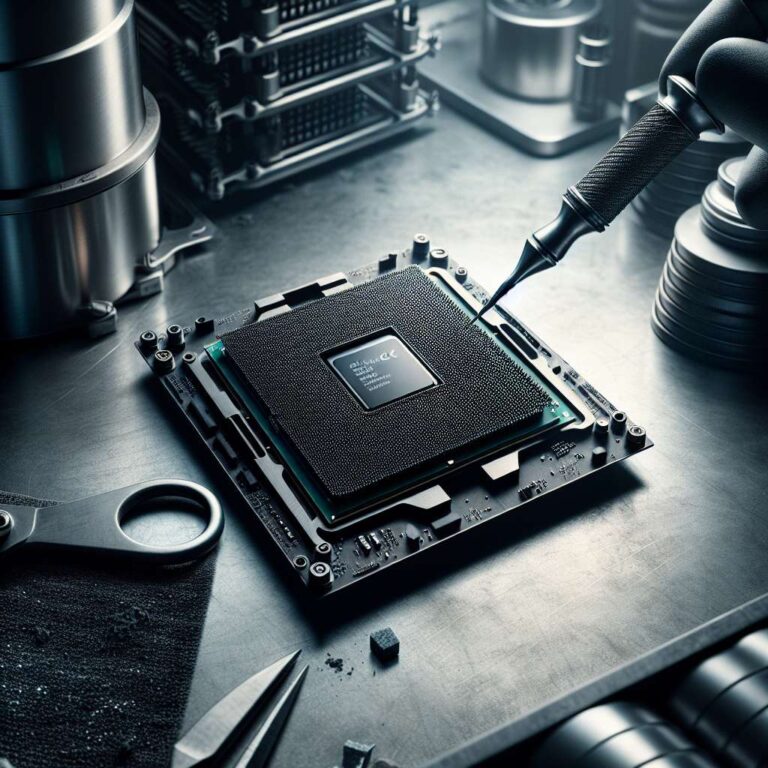
Coracer, a relatively obscure Chinese accessories brand, has unveiled an AM5-specific version of its GPE-01 graphene thermal pad, targeting AMD users who demand high-performance thermal management. Previously, GPE-01 was available only for Intel LGA 1851 and LGA 1700 sockets, but the new iteration is designed with a 32×32 mm footprint that covers the entire integrated heat spreader of AM5 chips without spillage or misfit.
This latest pad leverages a blend of graphene and silicon to significantly enhance heat transfer between the processor and the cooler. Coracer advertises a conductivity of 130 W/m·K, a figure that roughly doubles the performance of many liquid metal thermal compounds that have dominated enthusiast builds. The graphene layer is insulated to prevent electrical shorts, a critical safety measure for sensitive circuitry. With pre-cut sizing and no requirement for spreading or reapplication, this solution caters to builders seeking both convenience and reliability.
A notable selling point is Coracer´s claim that the pad can retain its performance for up to a decade. Thermal paste typically requires reapplication every few years due to drying out and degradation, but a graphene-based option promises virtually maintenance-free operation over the lifespan of most systems. Despite its bold technical specifications and longevity claims, Coracer remains a mystery online, with almost no digital presence. Curiously, Segotep, another Chinese company, introduced a GPE-01 pad for Intel CPUs last year, leaving the business relationship between the two entities unclear—whether Coracer is a spinoff or a licensee has not been disclosed. Pricing and retail availability for the AM5 variant are yet to be announced, although the Intel version aligns with other premium thermal pads on Chinese marketplaces.
No independent testing of Coracer´s product has yet been published, so real-world performance remains to be seen. For context, the well-known Thermal Grizzly KryoSheet, a similar graphene-silicon pad, offers a conductivity rating of only 7.5 W/m·K, making Coracer´s 130 W/m·K claim significant if substantiated. Enthusiasts and system builders are likely to watch closely for trustworthy third-party reviews to see whether GPE-01 can rewrite expectations for thermal interface materials in high-end systems.