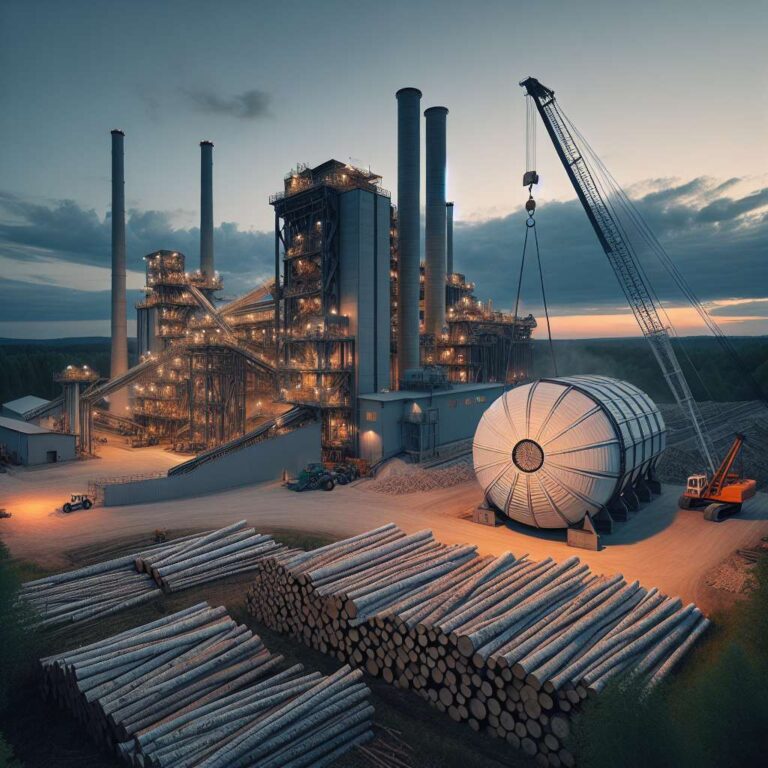
Major technology and finance companies are pouring money into bioenergy with carbon capture and storage, or BECCS, striking multimillion-dollar deals to capture carbon dioxide from paper mills and biomass plants and inject it into deep saline aquifers. Microsoft, JP MorganChase, and a consortium including Alphabet, Meta, Shopify, and Stripe are backing projects that retrofit existing facilities with carbon scrubbing equipment, aiming to deliver large volumes of removals quickly by leveraging established industrial infrastructure. BECCS now accounts for nearly 70 percent of announced carbon removal contracts, a surge driven by its perceived balance of cost, speed, and scalability compared with newer approaches.
Microsoft has become the most aggressive buyer. In April it agreed to purchase 3.7 million tons of removals from a southern US pulp and paper mill via CO280 over 12 years, followed days later by a record 6.75 million ton deal with AtmosClear, which is building a Louisiana biomass plant fueled by sugarcane bagasse and forest trimmings and targeting 680,000 tons captured per year. The company has also bought from Orsted, Gaia, and Arbor. Microsoft says it conducts extensive technical due diligence and seeks negative emissions across projects, while CO280 says typical mills could capture 850,000 to 900,000 tons annually, starting with 50 to 65 percent of on-site emissions and ultimately exceeding 90 percent. These investments are framed as economic boosts for rural regions and a bridge to cleaner operations, particularly because flue gas at pulp mills contains far higher concentrations of carbon dioxide than ambient air, which makes capture less energy intensive than direct air capture.
The strategy is controversial. Critics say many BECCS pathways overstate climate benefits by treating biomass as carbon neutral, ignoring emissions from harvesting, processing, transport, and foregone forest growth, and by conflating avoided emissions with true removal. Researchers warn that burning biomass can emit particulate matter, volatile organic compounds, sulfur dioxide, and carbon monoxide that are not fully addressed by carbon capture systems. Analysts also caution that growing demand for feedstocks risks incentivizing additional logging or converting land to energy crops. Even when projects use waste streams like bagasse, crop residues, or logging leftovers, accounting can be complex because those materials may have alternative uses that keep carbon out of the atmosphere. A 2019 National Academy of Sciences report found large theoretical potential using wastes, but experts argue vigilant standards are needed to prevent perverse incentives.
Proponents counter that retrofitting existing plants prevents emissions today and can scale faster than greenfield removals, which matters as companies rush to meet climate targets. BECCS purchases have outpaced other methods partly because they can be bolted onto running facilities. Yet the sector faces a credibility test as ambitions expand beyond retrofits to new-build biomass plants, including high-profile plans to develop millions of tons per year of removals. If biomass is not truly carbon neutral in practice, then new plants without capture add emissions and even BECCS may not deliver negative emissions, undermining corporate claims. With Microsoft’s climate program challenged by rising power needs from Artificial Intelligence data centers, the outcome of these BECCS investments could shape both decarbonization pathways and the integrity of future carbon markets.