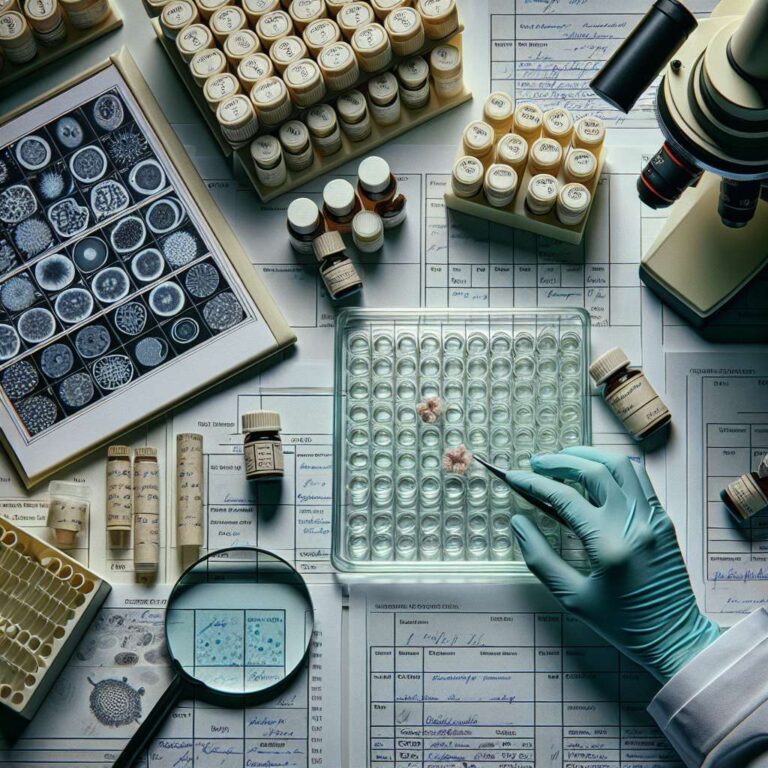
A new cancer testing system combines living tumour samples, automated drug screening and Artificial Intelligence analysis to help doctors identify which treatments are most likely to work before therapy begins. The approach is designed to move patients away from “blind” chemotherapy by testing drugs directly on miniature lab-grown versions of a patient’s tumour. Researchers say this could help avoid toxic treatments that offer little benefit and improve care for people with hard-to-treat cancers.
The UK-funded company PreComb is developing the platform for cancers including small-cell lung cancer, bowel cancer, bone cancer and adult and children’s brain cancers. Doctors remove a small piece of tumour tissue, and scientists grow living cancer cells from it in the lab, creating a miniature version of the patient’s cancer. Those miniature tumours are then exposed to a wide panel of drugs chosen according to the tumour’s genetic profile. Professor Javad Nazarian said his team can test more than 120 drugs that may match a patient’s tumour biology. Over two to three weeks, the platform monitors what happens to the cancer cells. Artificial Intelligence analyses thousands of images to work out whether they are growing, stabilising or dying off.
The technology is intended to address a long-standing problem in cancer care, where chemotherapy is often given without knowing in advance which drug or combination will work for a specific patient. Each year, around 412,000 people in the UK are diagnosed with cancer – the equivalent of one every 75 seconds. More than 100,000 go on to receive chemotherapy. Scientists behind the platform say testing treatments on a patient’s own tumour material could offer a more precise way to choose therapy than relying mainly on what worked on average in previous patients.
Professor Nazarian said the speed of the system could be especially important for brain tumours, where treatment decisions often must be made very quickly after surgery. He described the platform as a potentially major advance in showing whether tumour cells are dying, proliferating or becoming dominant. He also cited one child who had been expected to live for only three months and survived for 19 months after doctors used the screening approach to guide treatment.
PreComb said the system uses automated robotics and well plates to run many drug tests at once. Chief executive Hal Bosher said, “Our platform generates around 5,500 images per test, and with the advent of AI and machine learning we can now process that data and get meaningful outcomes.” The company says it has now run 371 screens, generating more than 1.1 million tumour images, across 272 different drugs.