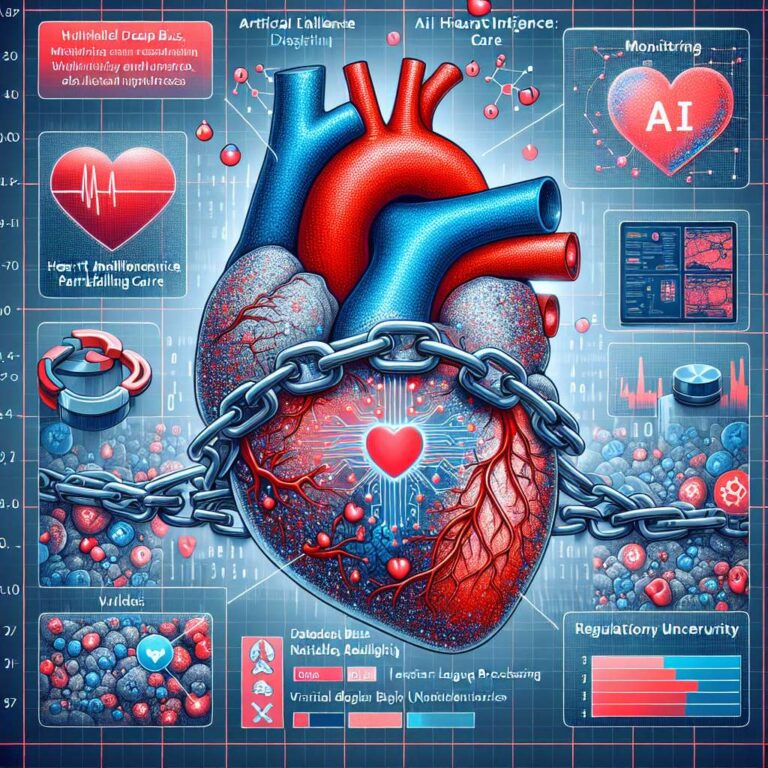
This peer reviewed narrative review examines how artificial intelligence is being applied across the heart failure care pathway and what stands in the way of broader clinical adoption. Following a structured PubMed search conducted in February 2025, the authors screened 1,617 records and included 163 studies spanning randomized trials, reviews, and observational analyses. Across this evidence base, artificial intelligence systems built on machine learning, deep learning and natural language processing are helping move heart failure management from reactive to proactive by surfacing patterns in electronic health records, electrocardiograms, imaging and biomarker data that traditional methods may miss.
In diagnostics and risk stratification, deep learning models trained on electrocardiogram signals and echocardiography improve the detection of subclinical dysfunction and predict outcomes such as mortality, hospital readmission and sudden cardiac death with higher accuracy than regression-based scores. Echocardiography and cardiac MRI benefit from automated segmentation, ejection fraction estimation and disease detection, while cardiac CT applications include plaque quantification and calcium scoring. Natural language processing applied to clinical notes enhances the identification of heart failure with preserved ejection fraction that often evades routine workflows. Outside the hospital, wearable sensors and mobile health tools feed artificial intelligence driven analytics to flag deterioration early and reduce avoidable admissions.
Therapeutically, models support personalized care by forecasting treatment response and safety. Machine learning has been used to identify responders to spironolactone in heart failure with preserved ejection fraction, to phenotype candidates for cardiac resynchronization therapy, and to anticipate adverse drug events such as digoxin toxicity. Explainability techniques like SHAP and LIME, as well as human in the loop oversight, are emphasized to build clinician trust and operationalize predictions in practice. The review also points to hybrid frameworks that blend imaging models with language models over electronic records for end to end pathways.
Key barriers persist. Dataset bias and limited generalizability across demographics, inconsistent data quality from mobile health devices, and the frequent absence of external validation undermine reliability. The black box nature of complex models, security and privacy obligations, workforce training needs, and funding constraints further slow deployment. Regulators are responding with differing strategies: the European Union’s risk based approach under the Artificial Intelligence Act, the United States Food and Drug Administration’s focus on software as a medical device and real world performance, and safety and efficacy centered systems in the United Kingdom, Japan and South Korea. Yet clearer guidance on algorithmic bias and continuously learning models remains a cross border gap.
Looking ahead, the authors highlight digital heart twins, multi omics integration, and prospective, real world trials to establish external validity. They call for standardized governance aligned with authorities such as the Food and Drug Administration and the Medicines and Healthcare products Regulatory Agency, coupled with ethical oversight and regular clinical engagement. With these foundations, artificial intelligence could anchor a shift to precision, data driven heart failure care that improves outcomes and quality of life.