
Artificial Intelligence robot fingertip sensing seen as next edge breakthrough

Artificial Intelligence robot computing is expected to move increasingly toward edge devices, with dexterous robotic hands emerging as a key endpoint. Industry attention is focusing on fingertip sensing as the next major area for robotics progress.

Artificial Intelligence robot computing power is expected to shift significantly toward edge devices. Dexterous robotic hands are poised to play a critical role as the core endpoint in that transition, reflecting a broader push to move intelligence closer to where machines physically interact with the world.

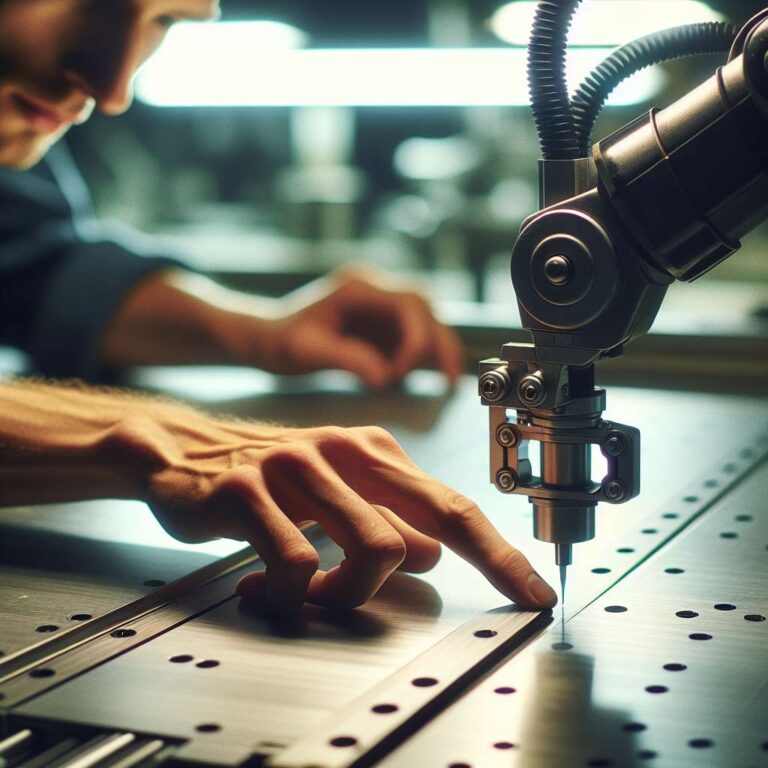
Industry experts see the next major breakthrough in Artificial Intelligence robotics coming from fingertip sensing. That focus highlights the growing importance of robots not only processing information, but also acquiring fine-grained tactile input at the point of contact. In this view, robotic hands are becoming central to future system design because they connect edge computing capability with real-world manipulation.

The available details point to a convergence of robotics, sensors, and edge computing within the ICT manufacturing landscape. Related categorization around MEMS, robot, robotics, and sensor technologies suggests that tactile sensing components are being treated as an important enabling layer for more capable robotic systems. The emphasis on dexterity also indicates that performance gains are expected to come from improving how robots sense and respond through their fingertips rather than relying only on centralized computing power.

The broader theme is a shift in where value will be created in Artificial Intelligence robotics. As computing moves outward to edge devices, the combination of sensing, manipulation, and local processing is becoming more important. Dexterous hands and fingertip sensing are now being framed as a likely trigger for the next phase of robotics development.
52

Impact Score

Apple plans Intel 18A-P for M7 and 14A for A21

Apple is expected to use Intel’s 18A-P process for M7 chips in MacBook models and Intel’s 14A process for A21 chips in iPhones. The shift points to a broader supplier strategy as Apple moves beyond TSMC for parts of its future silicon roadmap.

Google and other chatbots surface real phone numbers

Generative Artificial Intelligence chatbots are surfacing real phone numbers and other personal details, sometimes by pulling from obscure public sources and sometimes by inventing plausible but wrong contact information. Privacy experts say users have few reliable ways to find out whether their data is in model training sets or to force its removal.

U.S. and China revisit Artificial Intelligence emergency talks

Washington and Beijing are exploring renewed talks on an emergency communication channel for Artificial Intelligence as fears grow over the capabilities of Anthropic’s Mythos model. The shift reflects rising concern in both capitals that competitive pressure is outpacing safeguards.

Artificial Intelligence divides employers as hiring and headcount shift

U.S. hiring beat expectations in April, but employers remain split on whether Artificial Intelligence should drive layoffs, productivity gains, or internal redeployment. At the same time, candidate use of Artificial Intelligence is outpacing employer adoption in hiring, adding new pressure to screening and entry-level recruiting.

Contact Us

Got questions? Use the form to contact us.

Contact Form

Clicking next sends a verification code to your email. After verifying, you can enter your message.