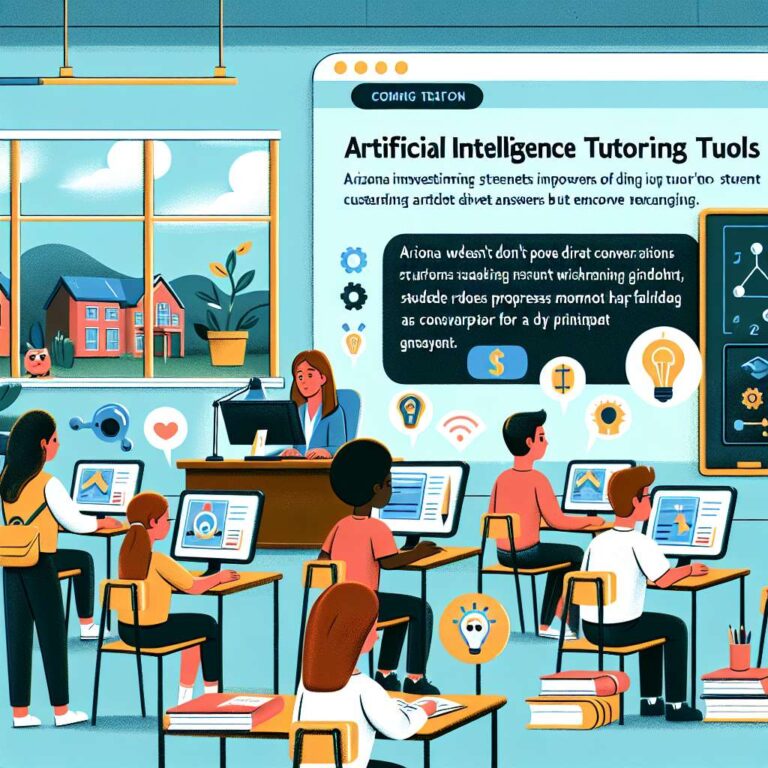
The Arizona Department of Education is investing $2 million to put artificial intelligence in the classroom, funding software that aims to coach students through problems instead of simply providing answers. The program centers on Khanmigo AI, an artificial intelligence tutor developed by Khan Academy, and is already in use in the rural Sonoita Elementary School District. Officials said 40 school districts have won grants for Khanmigo so far, positioning the tool as a structured alternative to open-ended chatbots.
At Elgin Elementary, part of the Sonoita district, 91 students from 2nd to 8th grade have used the new software for four days, and teachers and students report early gains. Student Ezekiel Kramer described struggling last year, saying, “When I get stuck on a problem, I would sit there for an hour or so,” and that his grades would drop as problems in one class snowballed into others. Now he uses the artificial intelligence tutor in class and at home, working ahead while the teacher focuses on classmates, and he said his grades are improving. Math teacher Kyndra Alexis Ortiz emphasized that the system is different from ChatGPT and said, “How we can use AI to help us think and not necessarily to cheat,” adding that it is already improving student engagement and diverting students from misusing computers to a platform they enjoy that keeps them on task.
District leaders stressed that the artificial intelligence is built to guide thinking rather than hand out solutions. Superintendent and principal Daniel Erickson said that if students ask the tool for an answer, “it won’t,” because it is “purposefully designed” not to do that, and that they appreciate how it pushes students to think. Erickson demonstrated a dashboard that allows teachers to track student progress, review flagged conversations, and create lesson plans in minutes. To encourage participation, the district will let the top Khanmigo performer serve as principal for the day, and Kramer is currently in the lead. Khanmigo AI costs $15 per student, and the state provides $5,000 through the Direct Student Services grant for Title I schools to help cover the cost, supporting broader adoption of the artificial intelligence platform across Arizona.