
Applied Materials debuts new transistor systems for 2 nm logic chips

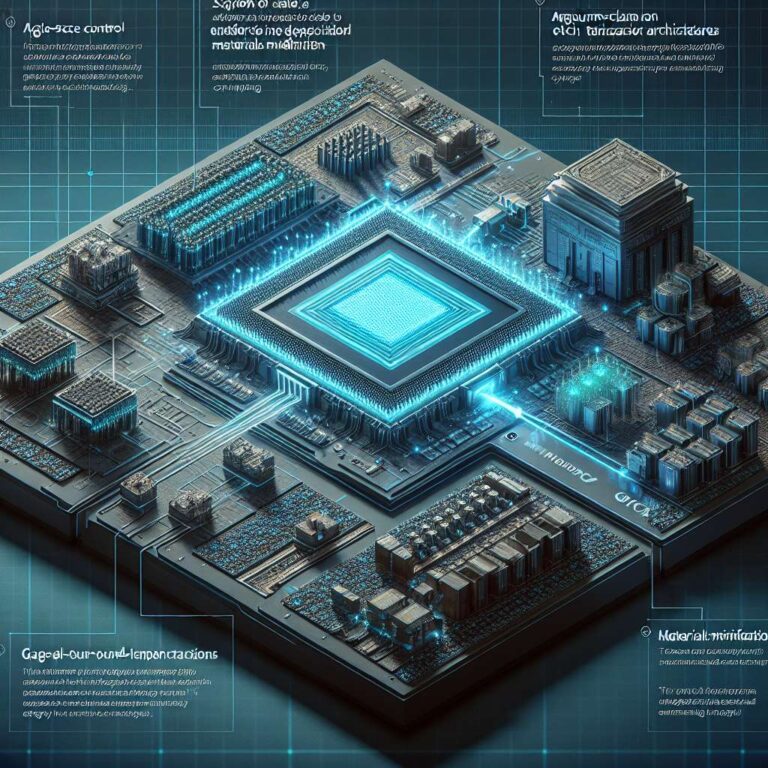
Applied Materials is rolling out new deposition, etch and materials modification systems designed to enhance performance and energy efficiency for 2 nm-class Gate-All-Around logic chips used in Artificial Intelligence computing.

Applied Materials introduced new deposition, etch and materials modification systems that boost the performance of leading-edge logic chips at 2 nm and beyond, with the technologies aimed at supercharging Artificial Intelligence compute through atomic-scale improvements to the transistor. The focus is on refining the most fundamental electronic building block so that it can deliver higher performance while maintaining tight control at extremely small geometries.

The transition to Gate-All-Around transistors is described as a major industry inflection and a critical enabler of the energy-efficient computing needed for more powerful Artificial Intelligence chips. As 2 nm-class Gate-All-Around chips ramp to volume production this year, Applied Materials is introducing new material innovations specifically tailored to enhance next-generation Gate-All-Around transistors targeting angstrom nodes, aligning process technology with the aggressive scaling roadmap.

According to the company, the combined impact of the new chipmaking systems contributes a significant portion of the total energy-efficient performance gains of Gate-All-Around process node transitions. By targeting both transistor structures and associated materials processes, the systems are intended to improve overall logic chip capabilities for data-intensive workloads while supporting the continued evolution of energy-efficient Artificial Intelligence computing.
65

Impact Score

Empirical Research Assistance automates scientific coding

Empirical Research Assistance, a system developed by researchers at Google and Harvard, automatically writes and refines scientific software for scorable research tasks. Tests showed it could outperform expert-built programs across problems including COVID-19 forecasting, neural modeling, and single-cell RNA sequencing analysis.

Google unveils new Artificial Intelligence models and personal agents

Google used its I/O developer conference to introduce updated Gemini models and personal Artificial Intelligence agents aimed at competing more aggressively with OpenAI and Anthropic. The push centers on stronger models, wider product integration, and a broader enterprise and developer pitch.

Policymakers weigh pause on Artificial Intelligence data center construction

Federal, state, and local officials are moving to slow or condition large data center development as concerns grow over electricity costs, grid strain, environmental effects, and labor standards. Proposed moratoriums and tax incentive changes are creating new uncertainty for developers, hyperscalers, and financiers.

Contact Us

Got questions? Use the form to contact us.

Contact Form

Clicking next sends a verification code to your email. After verifying, you can enter your message.