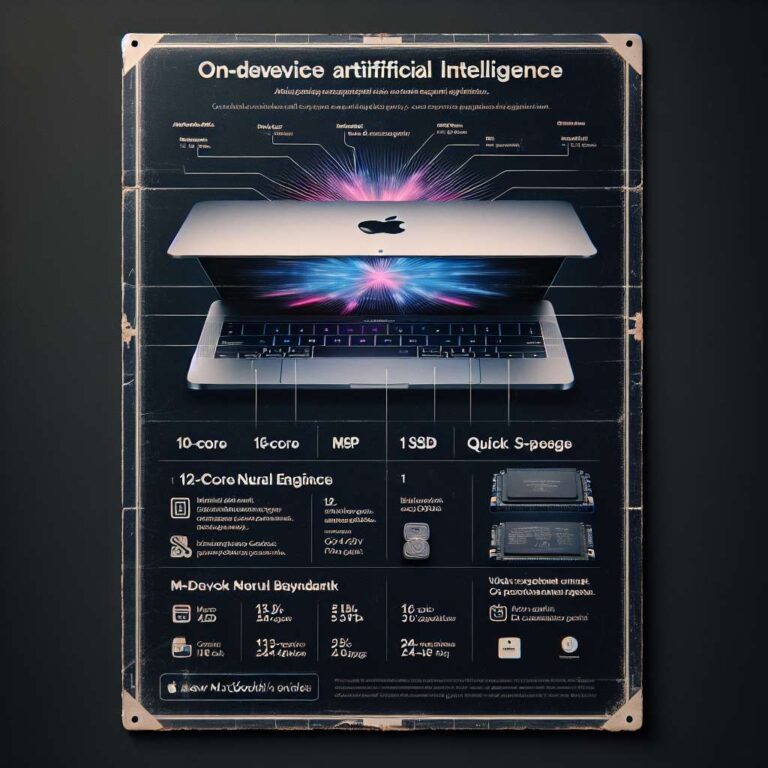
Apple introduced a new 14-inch MacBook Pro powered by the M5 chip, positioning it as a major step forward for Artificial Intelligence performance on the Mac. The system pairs a redesigned GPU that includes a Neural Accelerator in each core with a faster CPU, an enhanced Neural Engine, quicker storage, and higher memory bandwidth. Apple cites up to 24 hours of battery life, a brighter Liquid Retina XDR display with a nano-texture option, a 12 megapixel Center Stage camera, a six-speaker audio system, and a wide array of ports, alongside Apple Intelligence features and macOS Tahoe. The laptop ships in space black and silver and is available to preorder now, with in-store and customer deliveries scheduled for October 22.
At the heart of the update, the M5’s 10-core GPU delivers up to 3.5 times the Artificial Intelligence performance versus M4 and up to 6 times versus M1, while graphics performance is up to 1.6 times faster than the previous generation. A faster 16-core Neural Engine accelerates on-device, Artificial Intelligence driven tasks and generative models used by Apple Intelligence. The 10-core CPU includes what Apple calls the world’s fastest CPU core and offers up to 20 percent faster multithreaded performance compared to M4, helping with workloads like code compiling and multitasking across pro apps. Unified memory bandwidth exceeds 150 GB per second, and storage sees up to 2 times faster SSD performance with configurations up to 4 TB, improving tasks such as loading local large language models and moving large media files.
Apple’s performance claims cover a range of creator and developer workflows. The company reports up to 7.7 times faster Artificial Intelligence video enhancement in Topaz Video versus the 13-inch MacBook Pro with M1, and up to 1.8 times versus the 14-inch model with M4. It also cites up to 6.8 times faster 3D rendering in Blender compared to M1, up to 3.2 times higher gaming frame rates versus M1 and up to 1.6 times versus M4, and up to 2.1 times faster Xcode build performance versus M1 and up to 1.2 times versus M4. For upgraders, Apple positions M5 as a breakthrough, claiming up to 86 times faster Artificial Intelligence performance, up to 30 times faster GPU performance with ray tracing, and up to 5.5 times faster CPU performance versus Intel-based systems. Battery life can increase by as much as 14 hours for Intel upgraders and up to four hours for users coming from M1, reaching up to 24 hours.
macOS Tahoe brings a refreshed look and productivity updates, including a more capable Spotlight, a new Phone app with Continuity features, Live Activities from iPhone, customization via Liquid Glass design elements, and an updated Control Center. Apple Intelligence expands with Live Translation across Messages, FaceTime, and Phone, smarter Shortcuts with intelligent actions, and developer hooks to integrate Apple Intelligence or use the Foundations Model framework for on-device tasks. Apple highlights environmental progress too, noting the notebook uses 45 percent recycled content by weight, including 100 percent recycled aluminum in the enclosure, 100 percent recycled rare earth elements in all magnets, 100 percent recycled cobalt in the battery, 55 percent renewable electricity in manufacturing, and 100 percent fiber-based packaging.