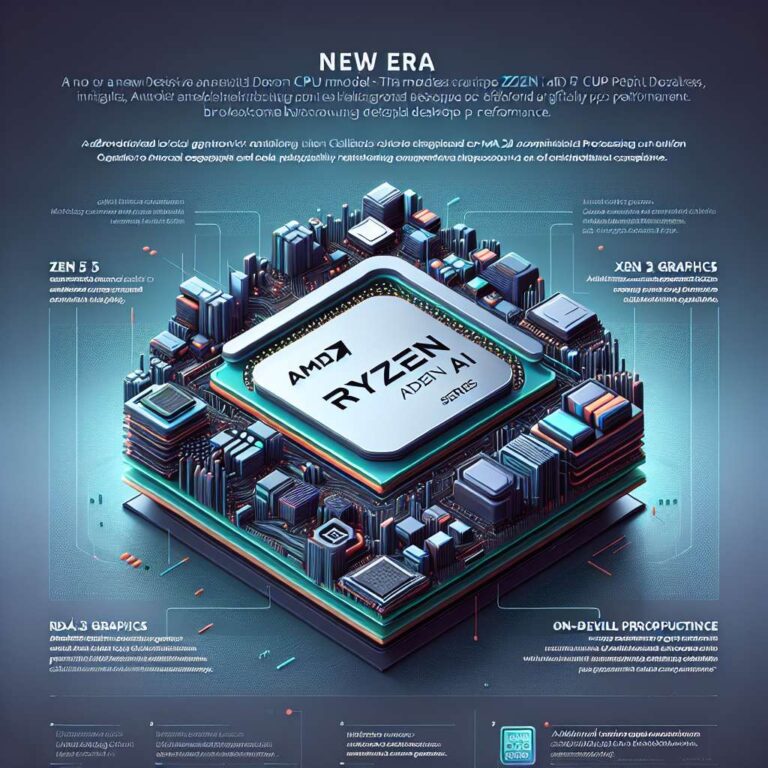
The Artificial Intelligence PC market is projected to expand at a compound annual growth rate (CAGR) of 30% from 2025 to 2034, surging from 91.2 billion in 2025 to nearly 967 billion by the end of the forecast period. AMD is moving to capture that growth with its Ryzen AI 400 Series, described as the world’s first desktop chips certified for Microsoft Copilot+ experiences. The processors are aimed at challenging Intel’s long-standing position in x86 PCs by offering stronger on-device Artificial Intelligence capabilities.
AMD announced the Ryzen AI 400 Series at the Mobile World Congress 2026. The lineup combines Zen 5 CPU cores, RDNA 3.5 graphics, and an XDNA 2 NPU to support tasks such as real-time image generation and productivity features without relying on the cloud. AMD says the chips deliver up to 50 trillion operations per second (TOPS) from their integrated Neural Processing Units. The company is targeting both consumer and business buyers as Artificial Intelligence PCs are expected to capture over 50% of global shipments by 2026, up from about 31% in 2025.
The push into Artificial Intelligence PCs is positioned as an important growth avenue as AMD looks beyond more mature gaming and data center segments. Analysts cited in the piece view the products as a possible driver of share gains and premium pricing, with potential to lift PC revenue by double digits annually as adoption increases. The launch also revives AMD’s long-running competition with Intel for leadership in x86 computing.
At the same time, AMD faces constraints in China. U.S. officials are contemplating export limits, capping sales of high-end Artificial Intelligence accelerators like AMD’s MI325 at 75,000 units per Chinese customer. The article says major buyers including Alibaba and ByteDance have signaled demand exceeding 150,000 units each, which would leave sales below potential demand. Although AMD could still ship up to a million units overall under the proposed framework, China’s preference for domestic suppliers could further limit the opportunity.
Investor expectations remain elevated but uneven. AMD’s stock nearly doubled in value over the past year, while 2026 has seen a 7% dip. The company’s broader Artificial Intelligence ambitions were underscored by a multi-year deal with Meta Platforms to deploy up to 6 gigawatts of AMD Instinct GPUs, potentially worth tens of billions, alongside a similar pact with OpenAI. Success in Artificial Intelligence PCs could add another major leg to that growth strategy.