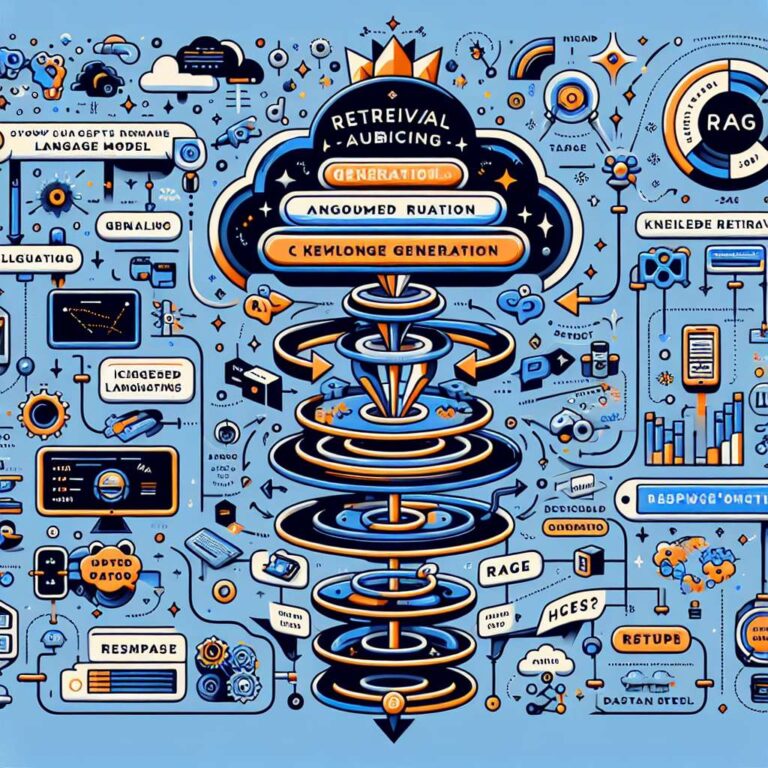
The article underscores retrieval-augmented generation (RAG) as a foundational capability for most large language model (LLM) applications, especially when those systems must reflect an organization’s own knowledge. By enriching prompts with company-specific information, RAG enables generative Artificial Intelligence systems to produce answers that better align with internal facts and policies. Anyone planning to deploy generative Artificial Intelligence in an enterprise context will almost certainly need RAG to connect general-purpose models with proprietary data that conventional training does not cover.
When RAG is implemented effectively, the piece notes three core benefits: improved accuracy, reduced hallucinations, and the ability for LLMs to reason over proprietary content. Grounding outputs in authoritative, internal sources helps models stay factual and relevant to the business domain. This, in turn, mitigates the risk that a model will fabricate or overgeneralize, a common failure mode when relying solely on parameters learned from public data. The promise is that answers become both context-aware and trustworthy because they are informed by the organization’s own documentation, records, and knowledge bases.
The basic idea is straightforward: find information that is relevant to a user’s query and pass that retrieved context to the LLM so it can generate a better response. In practice, however, the article hints that execution is more involved than the simplicity of the concept suggests. Identifying the right material for each query, ensuring that the retrieved content truly addresses user intent, and integrating it cleanly into the generation process are all nontrivial tasks. The effectiveness of RAG ultimately depends on consistently surfacing the most pertinent, company-specific information at the right moment so that the model’s output remains grounded.
Overall, the piece frames RAG as a near-requirement for enterprise-grade generative Artificial Intelligence. It presents RAG not as an optional enhancement but as the mechanism that ties powerful but general LLM capabilities to the proprietary knowledge that organizations depend on. While the notion of “retrieve, then generate” is easy to describe, the real work lies in operationalizing this flow so that accuracy, hallucination reduction, and proprietary reasoning are realized consistently across real-world applications.