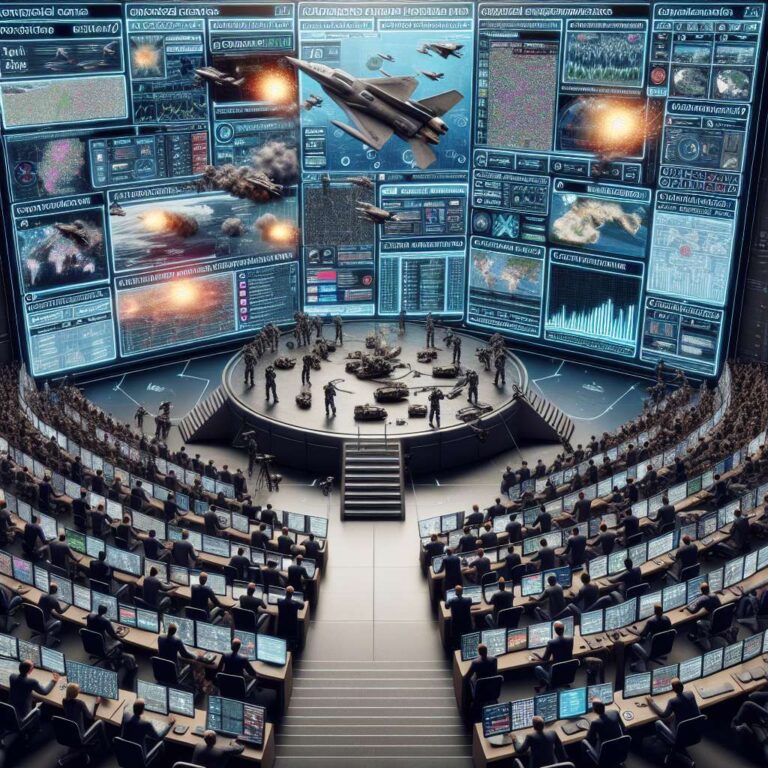
New open-source intelligence dashboards built with artificial intelligence tools are reshaping how people follow the US-Israel strikes against Iran, turning a distant conflict into a kind of live-streamed spectacle. One widely shared platform created by two people from venture capital firm Andreessen Horowitz combines satellite imagery, ship tracking, chat, news feeds, and links to prediction markets where users can bet on outcomes such as who will become Iran’s next “supreme leader.” Enthusiasts advertise these dashboards as faster and more truthful than traditional media, with some users claiming they learned more in “30 seconds” watching a map than from any major news network, and some bettors profiting from the recent selection of Mojtaba Khamenei.
A growing ecosystem of similar dashboards has appeared, many quickly “vibe-coded” with artificial intelligence coding assistants and promoted as democratized intelligence tools. Some have caught the eye of figures linked to firms like Palantir, the platform through which the US military is accessing models such as Anthropic’s Claude during the war. Multiple trends are converging: artificial intelligence makes it easy for people with limited technical skill to assemble and visualize open-source data; chatbots offer rapid but unreliable analysis; real-time prediction markets create financial incentives to track every development; and the military’s own use of artificial intelligence signals that these tools are what professionals rely on. The result is a new kind of artificial intelligence enabled wartime circus that can distort information as much as clarify it, while offering spectators a way to watch events unfold, place bets, and even talk about projecting the dashboards onto a “100 inch TV.”
Critics warn that this apparent transparency masks serious shortcomings. Digital investigations expert Craig Silverman, who has logged “20” such dashboards, argues they create an illusion of control while mainly aggregating “a ton of signals” that users may not truly understand. Many dashboards feature “intel feeds” composed of artificial intelligence generated summaries of complex, fast-moving events, which can introduce inaccuracies, and present everything at once, from maps of strike locations in Iran to obscure cryptocurrency prices. Unlike intelligence agencies, which pair data with expert analysis, historical context, and proprietary sources, these public tools emphasize volume of information over reliability. Their creators often frame them as democratizing elite intelligence, but the abundance of uncurated data does not automatically deliver accuracy or comprehension, roles traditionally filled by professional analysts and rigorous journalism.
The tight integration of prediction markets deepens concerns. The Andreessen Horowitz backed dashboard highlights a scrolling list of wagers on the platform Kalshi, in which the firm has invested, while others link to Polymarket, offering bets on scenarios such as whether the US will strike Iraq or when Iran’s internet will return. At the same time, artificial intelligence is making it easier to flood the information space with fake material: the Financial Times recently identified a wave of artificial intelligence generated satellite images tied to the conflict. Silverman notes that satellite imagery has long been seen by the public as highly trustworthy, so manipulated or fabricated examples threaten to erode confidence in a crucial form of evidence about what is actually happening. All together, the dashboards, betting markets, real and fake photos, and automated summaries combine into an ocean of artificial intelligence enabled content that ultimately makes the Iran war harder, not easier, for outsiders to understand.