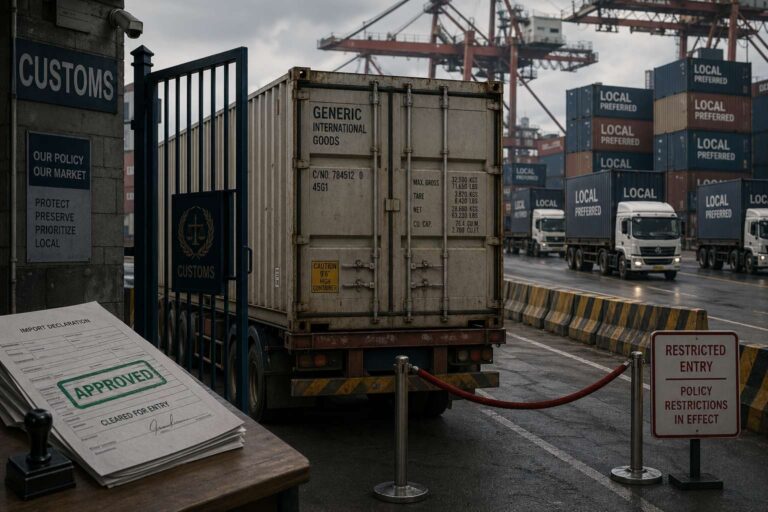
Four months after President Donald Trump lifted the ban on Nvidia selling its H200 Artificial Intelligence chips to China, Commerce Department Secretary Howard Lutnick said the company still has not sold any to Chinese companies. Lutnick said Beijing is making it difficult for Chinese companies to get permission to import these chips because the Chinese central government wants investment to remain focused on the domestic semiconductor industry.
Lutnick repeated that position after making the same statement in late February during a House hearing. Nvidia, however, said at GTC 2026 last month that it had already received orders and export licenses for multiple Chinese customers. The gap between those statements has left the status of H200 shipments unclear. Reports also indicate that Artificial Intelligence chip exports are being slowed at the Bureau of Industry and Security, where undersecretary Jeffrey Kessler has reportedly been personally reviewing each individual application.
The U.S. is finally allowing Nvidia to export its chips to China again, with a 25% fee, and many major Chinese firms such as Alibaba and ByteDance were reportedly ready to order hundreds of thousands of Nvidia’s Artificial Intelligence GPUs. However, Beijing has called for its customs officials to block H200 imports and has essentially only allowed universities and R&D labs to acquire them. China has been pushing domestic buyers toward locally manufactured chips from Huawei, Alibaba, Baidu, Cambricon, Moore Threads, and others.
The restrictions have added to Nvidia’s broader challenge in China. Huang said the company’s market share in China has fallen to under 60%, down from the 95% share it held before the sanctions. He has argued against a total ban on Artificial Intelligence chip exports to China, saying the U.S. should not allow Chinese chipmakers to dominate while American suppliers are locked out of the market.
Even with the import barriers and regulatory uncertainty, Chinese demand for H200 chips remains strong despite the product sitting behind Nvidia’s newer Blackwell and upcoming Vera Rubin Artificial Intelligence GPUs. Interest is high enough that some companies are reportedly considering obtaining the chips through the black market.