
Self-adaptive framework extracts earthquake data from web pages

A self-adaptive large language model framework is designed to extract and structure earthquake information from heterogeneous web sources by generating, validating, and reusing extraction schemas. In controlled tests, GPT_OSS delivered the strongest extraction quality, while selector errors were concentrated in wrong element selection and missing content.
Study finds widespread weaknesses in autonomous agents

A multi-institution study found that autonomous agents across several sectors are highly exposed to tool-chaining, goal drift, and memory poisoning attacks. The findings suggest agentic systems face broader and deeper security risks than stateless large language models.
Pennsylvania police use Artificial Intelligence body cameras for translation

East Lansdowne police are using body cameras with built-in Artificial Intelligence translation to communicate with people who do not speak English. Officials say the system is improving field interviews, speeding up responses, and strengthening community trust.
Federal safety net unprepared for Artificial Intelligence job losses

Economists are warning that the federal system designed to support displaced workers is not equipped for a wave of job losses tied to Artificial Intelligence. Existing unemployment benefits and retraining programs are widely seen as too limited to manage broad disruption.
AMD sees agentic Artificial Intelligence raising CPU demand in compute nodes
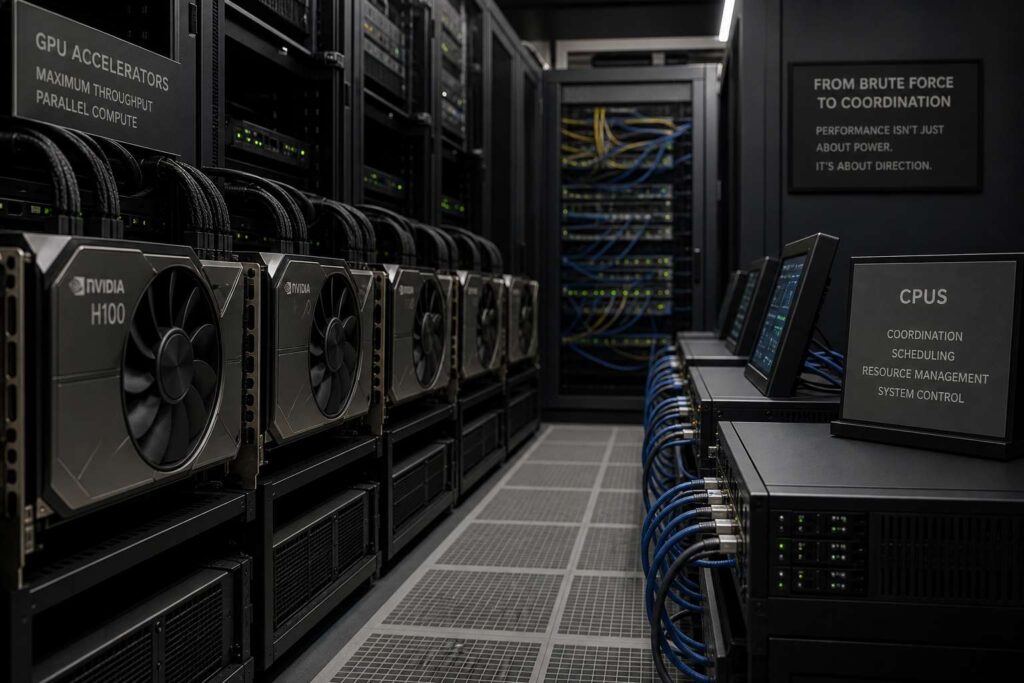
AMD says agentic Artificial Intelligence is changing server design by increasing the importance of CPUs alongside GPUs. The company expects compute nodes to move closer to a balanced CPU-to-GPU mix, with some deployments potentially using more CPUs than GPUs.
Chrome downloads Gemini Nano model locally without clear consent

Google Chrome is reported to download a 4 GB Gemini Nano model onto some PCs automatically when certain Artificial Intelligence features are active. The process happens without clear notice in browser settings and can repeat after the model is deleted.
AMD plans specialized EPYC CPUs for Artificial Intelligence, hpc, and cloud

AMD is preparing a broader EPYC strategy with task-specific server CPUs aimed at agentic Artificial Intelligence, hpc, training and inference, and cloud deployments. The shift starts with the Zen 6 generation and adds Verano as an Artificial Intelligence-focused variant within the same EPYC family.
Nvidia expands spectrum-x ethernet with open mrc protocol

Nvidia is positioning Spectrum-X Ethernet as a foundation for large-scale Artificial Intelligence training, with Multipath Reliable Connection adding open, multi-path RDMA transport for higher resilience and throughput. OpenAI, Microsoft and Oracle are among the organizations using the technology in large Artificial Intelligence environments.
Anthropic explores Fractile chips to diversify supply

Anthropic is reportedly in early talks with London-based Fractile to secure high-performance Artificial Intelligence chips for inference workloads. The move would reduce reliance on Nvidia and broaden the company’s hardware supply chain.
OpenAI curbs odd creature references in chatbot responses

OpenAI has adjusted its models after users complained about overly familiar responses and strange references to goblins, gremlins, pigeons, and raccoons. The company traced the behavior to a retired “nerdy” personality whose habits spread into broader model training.