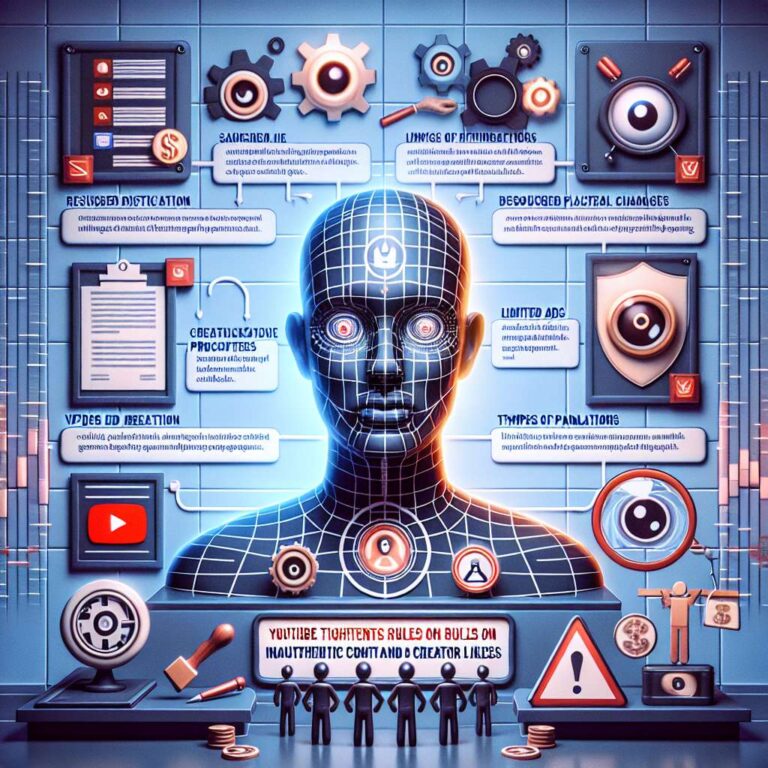
YouTube rewrote its inauthentic content rules across 2024 and 2025 to address a rise in deepfake impersonations, voice-clone scams, and Artificial Intelligence-assisted edits that can mislead viewers. The platform now treats undisclosed synthetic or altered media that depicts a real person doing or saying something they did not do as inauthentic content. The policy applies to creators, advertisers, agencies, and brands and can trigger reduced distribution, limited ads, demonetization, age restrictions, or removal.
The update explicitly covers Artificial Intelligence use cases such as face replacement, altered speech, revoicing, fabricated gestures, and AI-generated scenes that could be mistaken for authentic footage. YouTube cites high-profile examples that shaped enforcement, including the deepfake persona deepTomCruise, a fabricated MrBeast scam ad, political deepfakes during the 2024 Indonesia election cycle, and an AI-generated video misusing Tom Hanks’s likeness. Demonization triggers include undisclosed voice clones, deepfake face swaps, reconstructed statements, and thumbnails or metadata that imply authenticity when the footage is synthetic.
The likeness detection system matured in 2025 and now scans visual, audio, and metadata signals as a universal safeguard for creators in the YouTube Partner Program. The system compares verified reference samples against frames, thumbnails, voice patterns, subtitles, and on-screen metadata. Creators are asked to set up reference assets in Studio settings under identity and likeness, uploading clear face images, short voice clips, and links to verified accounts to reduce false positives. If detection flags potential manipulation, YouTube can place videos into limited-ad or hold-for-review states and notify creators to confirm disclosure and consent.
YouTube tightened labeling and disclosure rules. Any element that could reasonably mislead viewers into believing a real person said or did something now requires an Artificial Intelligence-generated disclosure. That includes localized dubs that recreate a creator’s natural voice using tools such as Papercup or ElevenLabs. The platform surfaces the AI label on watch pages and Shorts and expects sponsored content to include on-screen text, spoken disclaimers, descriptions, and captions when likeness is altered.
To avoid penalties, brands and creators should adopt structured preflight workflows: secure traceable approval for likeness use, run third-party detection scans with services like Hive Moderation, Reality Defender, or Intel’s FakeCatcher, and mirror disclosures across multiple layers. Agencies are advised to keep AI usage appendices and verify that Artificial Intelligence enhancements do not materially exaggerate product performance. The net effect is that authenticity on YouTube is now measurable, enforceable, and machine-verified, raising the compliance bar for anyone using synthetic media.