Research co-authored by Shahzad (Shaz) Ansari of Cambridge Judge Business School argues that the relationship between artificial intelligence and circular economy goals is far more complex than public support for everyday recycling suggests. Building on Ansari’s prior work on framing, the study contends that circularity in the context of artificial intelligence is not just a technical challenge but an interpretive struggle over what artificial intelligence is, what circularity should mean and who gets to decide. Different actors frame artificial intelligence alternately as a solution to environmental problems or as a contributor to them, and these competing interpretations shape how circular economy objectives are defined, pursued and governed across artificial intelligence ecosystems.
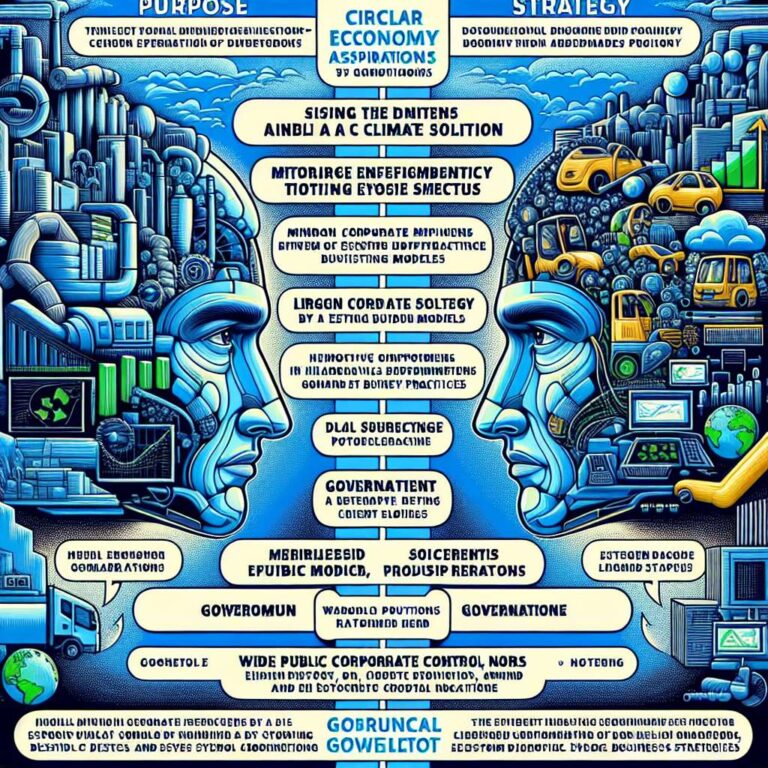
The paper, published in Long Range Planning, identifies 3 core tensions that structure debates about artificial intelligence and circularity: purpose, strategy and governance. The purpose tension asks whether artificial intelligence is solving climate change or fueling it, with optimists highlighting climate breakthroughs and critics pointing to the huge amount of energy used in large language models and the resulting greenhouse gas emissions. The strategy tension contrasts incremental efficiency improvements in existing business and technology processes with demands for systemic transformation of hardware and business models. The governance tension focuses on who controls artificial intelligence sustainability outcomes, pitting internal control by a small number of powerful technology firms against broader sovereignty that involves public actors and external oversight. The study positions these 3 tensions as mechanisms that determine how coordination around circularity occurs in business ecosystems of loosely related yet interdependent actors.
Drawing on policy documents, interviews, industry reports and public statements from circularity and artificial intelligence ecosystem participants between 2003 and 2005, the authors track how techno-solutionist and techno-scepticist framings clash and how some organisations attempt reconciliatory “green artificial intelligence” framing. They show how orchestrators such as large artificial intelligence firms and other actors selectively emphasise certain aspects of artificial intelligence circularity while downplaying others, using framing contests to influence shared meaning, mobilise support and shape which definitions of circular artificial intelligence prevail. The research concludes that circularity becomes a site of contestation rather than a straightforward technical goal, and that without substantive changes, reconciliatory framing risks drifting into symbolic action. For managers, the authors recommend dual framing that treats circularity and innovation as interdependent imperatives, supported by granular performance indicators such as energy efficiency per artificial intelligence model, while policymakers are urged to create standards and forums that foster coordinated yet innovative approaches. Ultimately, the study argues that circularity operates as an internal force whose meaning is continually reshaped through these framing dynamics, influencing new roles, governance structures and value propositions in artificial intelligence ecosystems.