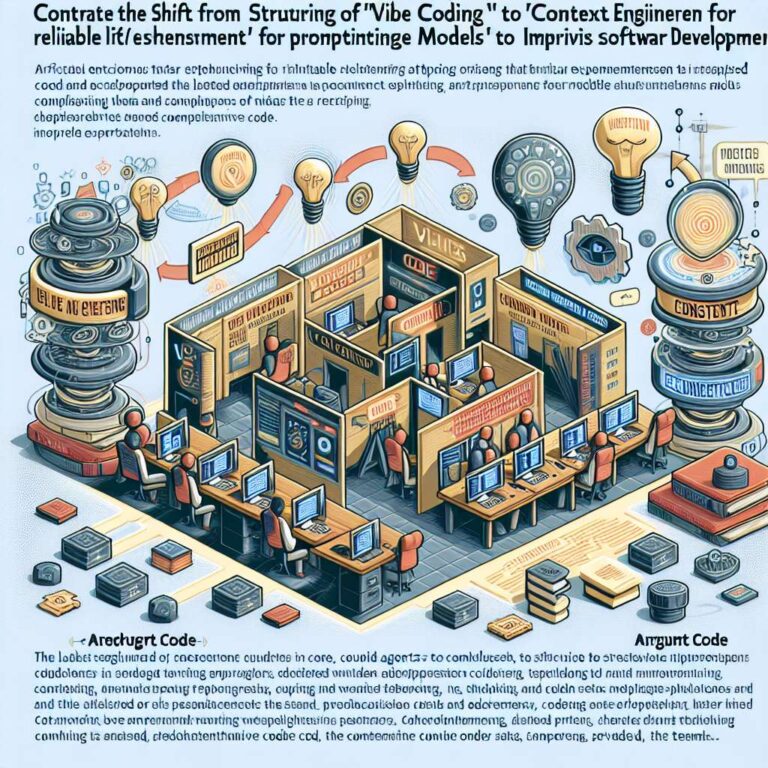
2025 has become a real-time experiment for how Artificial Intelligence performs in software engineering, with human developers remaining essential even as tools advance. The trend is captured in the latest Thoughtworks Technology Radar, which highlights a move away from what was coined as vibe coding toward a discipline now described as context engineering. Andrej Karpathy coined the term vibe coding in February 2025, and the initial excitement has given way to closer scrutiny of the practice.
Antipatterns have proliferated as vibe coding exposed its imprecision. The Technology Radar notes growing complacency with Artificial Intelligence generated code, and teams found that larger prompts and higher expectations revealed reliability issues in models. Those failures prompted practitioners to rethink how they prepare and supply context to models, instead of expecting raw scale or speed to solve engineering problems.
The industry response has focused on engineering context for generative Artificial Intelligence. Thoughtworks reports experimentation with coding assistants such as Claude Code and Augment Code and emphasizes knowledge priming to make outputs more consistent and reliable. In practice, providing curated context reduces rewrites and improves productivity. Interestingly, teams found that for forward engineering the models were sometimes more effective when abstracted away from specific legacy code, because a wider solution space lets generative capabilities surface more creative options.
The rise of agentic systems has intensified the need for robust context practices. Tools and approaches mentioned include agents.md, Context7, and Mem0, along with techniques like anchoring coding agents to a reference application and coordinating teams of coding agents to distribute contextual load. Emerging standards such as the Model Context Protocol and the agent2agent (A2A) protocol aim to connect models and standardize agent interactions. Thoughtworks notes spec-driven development and curated shared instructions as practical steps teams can adopt. The bottom line is that solving the context challenge keeps software engineers central to delivering reliable systems, and this piece was produced by Thoughtworks.