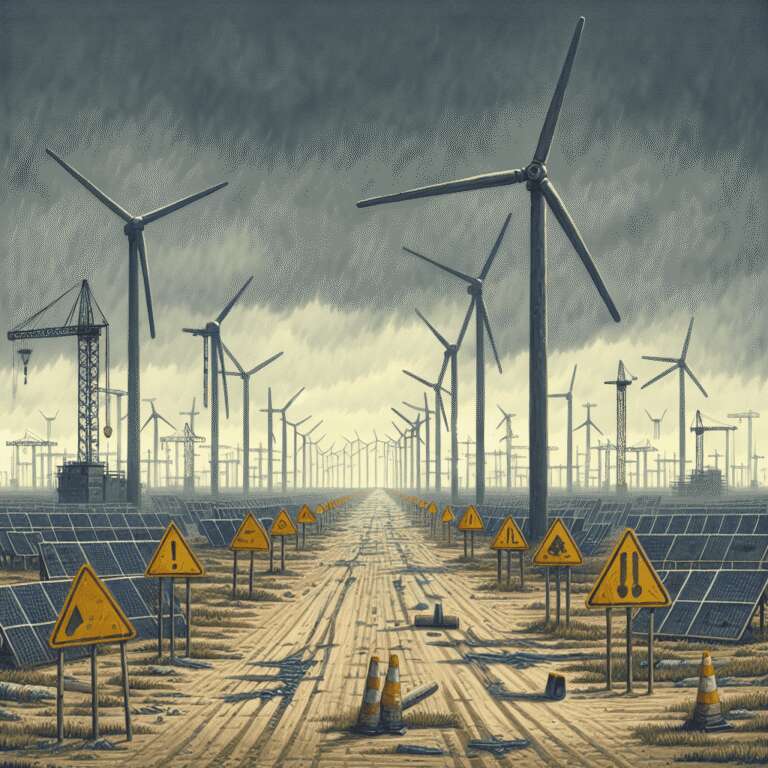
At least 16 large-scale climate technology projects across the United States were canceled, downsized, or shut down in the first quarter of 2025, representing a significant increase in sector contraction compared to prior years. This surge in cancellations, detailed in a new report from the nonpartisan policy group E2, marks a dramatic shift after a period of robust growth spurred by federal incentives such as the Inflation Reduction Act.
The intensified pace of cancellations is linked to several evolving factors, including abrupt changes in federal policy. The White House has acted to retract previously allocated investments, prompting uncertainty among prospective project developers. Additionally, new tariffs on imported goods—particularly from China, a key player in global battery and clean energy technology supply chains—have further destabilized the investment landscape. Compounding these challenges, market demand for certain technologies like electric vehicles has not met earlier projections, resulting in supply-demand imbalances.
E2, which traditionally tracks clean energy investments, has broadened its reporting to include cancellations, shutdowns, and scaling-back of projects. They report that while 18 large-scale projects were canceled, closed, or downsized between August 2022 and the end of 2024, nearly as many (16) were lost in just the first three months of 2025. This data primarily covers major projects, omitting smaller or merely paused efforts, and signals broader market uncertainty. According to Professor Jay Turner of Wellesley College—who tracks clean energy supply chains—this attrition is not wholly unexpected given the number of projects announced in recent years and subsequent industry adjustments to align supply with real demand. For instance, Aspen Aerogels canceled a planned Georgia facility despite previously securing a significant federal loan commitment, focusing instead on existing and international operations.
Despite these setbacks, numerous manufacturing and clean energy projects remain under construction or have already become operational. However, experts agree that the overall pace of progress is hampered by the shifting policy and market environment, causing hesitancy within the business community and potentially foreshadowing continued volatility for US climate technology investments.