The article examines the gap between what new artificial intelligence technologies are capable of in principle and which models are actually being used across the global economy. It discusses research by Austin Horng-En Wang and Kyle Siler-Evans titled “U.S.-China Competition for Artificial Intelligence Markets: Analyzing Global Use Patterns of Large Language Models,” published by the RAND Corporation on January 14, 2026. Their work looks beyond headline-grabbing technical advances to focus on real-world adoption, asking how competition between United States and Chinese providers is playing out through user behavior around the world.
The researchers analyze “website traffic data across 135 countries from April 2024 through May 2025,” tracking “monthly website visits from each country to seven U.S.-based and thirteen China-based LLM service websites.” They acknowledge that these numbers are imperfect, because use of downloaded open-source artificial intelligence tools does not appear in web traffic statistics. The period is notable because in January 2025 a Chinese company called DeepSeek launched an artificial intelligence tool with capabilities that considerably exceeded expectations, which provided an opportunity to see whether a sudden improvement in Chinese technology would quickly shift usage patterns.
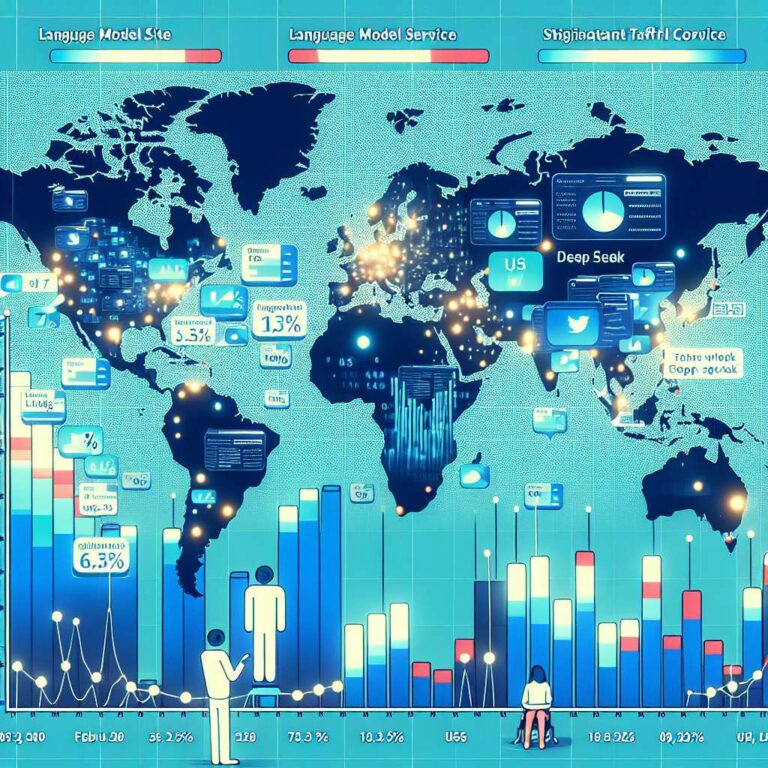
Traffic data show that Chinese websites were getting about 2-3% of the total visits in 2024, that with the arrival of DeepSeek the Chinese share rose as high as 13% in February 2025, and that by August 2025 it had sagged back to about 6%. The growth in use of artificial intelligence sites in summer 2025 mostly happened at United States-based websites, suggesting that United States providers maintained a strong lead even after DeepSeek’s launch. The authors explore whether pricing, language support, or diplomatic ties can explain this dominance and find little support for those explanations, noting that while paid subscriptions to United States artificial intelligence services cost more, many users still rely on free access. Given the lack of convincing alternatives, they infer that the capabilities of United States-based tools are currently better, while emphasizing that the DeepSeek episode reveals users around the world are not locked into providers from any given country and are willing to experiment when new options appear.