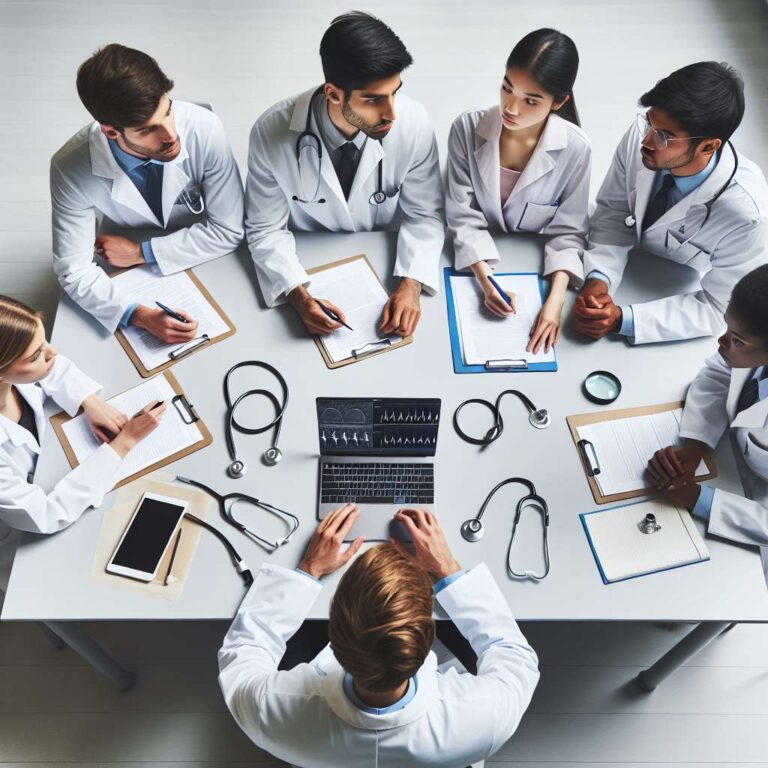
The University of Miami Miller School of Medicine has launched a new elective titled ´Introduction to Artificial Intelligence in Medicine and Public Health´ for students in its combined M.D./M.P.H. program. This course reflects the school’s commitment to equipping future physicians and healthcare leaders with the knowledge and skills necessary to engage with rapidly evolving artificial intelligence technologies. Students are offered a broad overview of artificial intelligence’s applications, benefits, and potential pitfalls in contemporary medicine, with lessons spanning technical, ethical, clinical, and regulatory dimensions.
Designed by Dr. Shirin Shafazand, the course covers foundational artificial intelligence concepts such as machine learning, deep learning, neural networks, natural language processing, and prompt engineering. The curriculum also addresses crucial subjects like ethics, cybersecurity, and government regulation. Students engage through expert lectures, discussions, and hands-on projects that include developing custom artificial intelligence agents to perform specific healthcare tasks. These projects ranged from tools aimed at patient education to applications designed to enhance clinical knowledge, reflecting participants´ varied interests and career aspirations.
For many students, the course is not simply an academic exercise but an ethical obligation in a medical landscape increasingly shaped by artificial intelligence. They examine core challenges such as safeguarding patient privacy, the risks of algorithmic error, and the nuances of integrating artificial intelligence responsibly into clinical workflows. A hands-on demonstration by Dr. Maritza Suarez of an ambient scribe system illustrated how artificial intelligence can streamline everyday clinical duties, while prompt engineering emerged as a popular technique for automating rote tasks or improving personal productivity. By the end of the elective, students expressed both enthusiasm for artificial intelligence’s potential and caution regarding its limitations, recognizing the need for ongoing critical appraisal whenever these technologies intersect with patient care. Dr. Shafazand emphasized that while artificial intelligence is a powerful asset, it cannot substitute for human judgment—a lesson Miller School students are encouraged to carry forward as they shape the future of medicine.