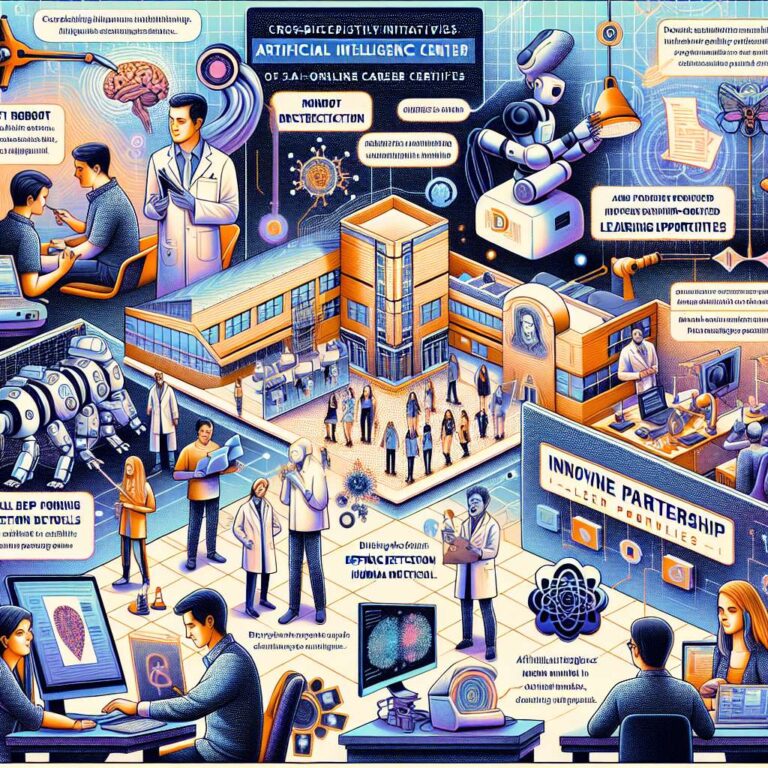
The University of Maryland, Baltimore County (UMBC) Artificial Intelligence Center actively disseminates news, research breakthroughs, and learning opportunities in the field of artificial intelligence. Through the UMBC-AI group, faculty, staff, and students are kept informed about events, collaborative research, and recent accomplishments. Various UMBC departments and external partners contribute to a dynamic stream of updates, fostering both academic and applied growth in artificial intelligence.
Recent highlights include pioneering research on robotics and human interaction, such as a project exploring how a robot dance partner could help alleviate stress, developed by multidisciplinary UMBC faculty. Groundbreaking creative achievements have also emerged, with Professor Eric Millikin’s entirely artificial intelligence-generated film, ´The Dance of the Nain Rouge,´ earning selection at the Bali International AI Film Festival. Student innovation is evident as well; Somya Singh, a graduate student, has gained recognition for her work on artificial intelligence-powered deepfake detection to address cybersecurity risks.
Strategic partnerships and educational initiatives underscore UMBC’s growing influence in artificial intelligence. The University System of Maryland, in collaboration with Google, now offers free access to online Google Career Certificates and artificial intelligence courses for UMBC students and other partner institutions. The university’s Center for Real-time Distributed Sensing and Autonomy demonstrated advanced human-robot teaming technologies, while new artificial intelligence-supported mapping for the Chesapeake Bay Watershed is set to double documented stream miles, optimizing ecological restoration. Events such as seminars on artificial intelligence models in medical imaging, in addition to radio features and new graduate courses on agent computing, exhibit the broad outreach and integration of artificial intelligence at UMBC. Faculty leaders like Professor Diane Alonso are recognized at the system level, being appointed senior fellows for generative artificial intelligence pedagogy at the Kirwan Center for Academic Innovation. These developments illustrate a multifaceted commitment to driving artificial intelligence innovation across research, learning, and societal impact at UMBC.