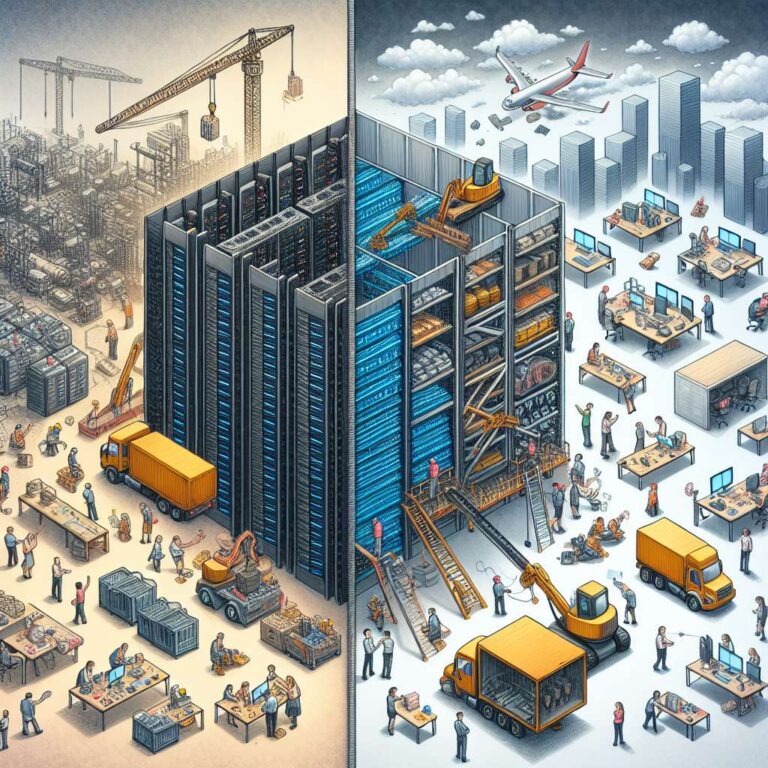
Artificial Intelligence is unfolding in two distinct phases that are creating both massive opportunity and growing unease across markets. In the first act, hyperscale technology companies are locked in an infrastructure arms race defined by enormous capital intensity, energy consumption and chip demand. In this phase, the priority is to secure the computing power needed to train and run ever larger models, even if that means rational over investment where the fear of being left behind exceeds the fear of overspending. The second act is emerging more slowly and centers on the end user reality, where the real question is which companies can translate cutting edge models into scalable, profitable products that show up clearly on income statements and balance sheets.
The current wave of investment is unprecedented in scope and highly concentrated among a small group of platforms. With collective capital expenditures projected to exceed $650B in 2026, Microsoft, Alphabet, Amazon and Meta are outspending the entire annual GDP of mid sized nations. This spending is cascading through a global supply chain that now functions as a critical pillar of economic growth, particularly in the United States. Immediate beneficiaries include high profile chip designers such as NVIDIA and AMD, but the money extends far deeper to foundries and memory specialists like TSMC, Micron and Intel, equipment suppliers such as ASML, Lam Research and Applied Materials, design software providers Synopsys and Cadence, and infrastructure players like Schneider Electric and Vertiv that build and cool data centers. The $650B is described as real, tangible capital funded by dominant digital cash cows, with companies even issuing debt against strong cash flows to avoid losing ground in the race.
Yet underneath the boom runs a growing concern that adoption may not keep pace with infrastructure buildout. Most large enterprises remain stuck in proof of concept experiments that sit at the edge rather than the core of their business models, while only digital native firms such as Alphabet are aggressively embedding Artificial Intelligence into revenue generating systems like advertising. For Artificial Intelligence to deliver on its promise, it must be tightly integrated into everyday enterprise software and workflows to generate measurable productivity gains; until then, the technology remains more a promise than a profit engine. The timing risk is amplified by the possibility of a Bullwhip Effect, where $650B of hyperscaler spending assumes rapid industry wide transformation, but slower adoption could trigger a sharp collapse in orders and a brutal price war in chips and equipment. At the same time, a scenario where Artificial Intelligence is too successful and displaces large numbers of white collar jobs raises fundamental questions about future consumption in an economy decoupled from labor. The central market fear is this decoupling between a supercharged equipment cycle and a hesitant end user adoption cycle, with the winners of the infrastructure phase already known while the ultimate winners of the application era have yet to appear.